
Some months ago we made plans for this Saturday to visit friends of friends who are now also our friends, who live about an hour to the south of Paris. It was hard to come up with a date because this week is school vacation week and so many people (including our friends) are off and will be going away. The plan, which worked perfectly, was to visit the town of Dourdan which is close by to our friend’s home, to see the sites there and visit the grave of Roustum Raza, the Armenian mamluk — bodyguard, servant, confident — of Napoleon I, who is buried there. Raza was born in Tiflis, George to Armenian parents in 1783. He was kidnapped as a young boy and sold as a slave 6 times until he was “given to Napoleon by the sheikh of Cairo in 1798” (Wikipedia). He died in Dourdan in 1845. Some years ago I had come across his name and read his memoirs in French posted (public domain) online, Our friends (one of whom is also Armenian) knew of our interest and arranged the visit to his grave site. He was with Napoleon for 16 years. I just discovered that his memoir has been published in English – 2014.


This is as good as I can get these photos posted here. I’m sorry the writing is small and not readable. The stone we are standing next to, is an Armenian khatchkar, which is not a tomp stone, but a commemoration stone and can be found all over Armenia. (An 11th century khatchkar was gifted to the U.N. by Armenia when it began independent and was admitted to the U.N. It is stunning in its beauty). This was is in memory of Roustam and also of the Armenian men who fought and died in the French Foreign Legion after WWI against the Turks. Roustam’s tomb is to the left of his wife’s who was from Dourdan and the reason he lived here after leaving Napoleon’s service. This was the first time we were in a French cemetery. We were told that they are all the same without any grass or trees — just paved walkways with slabs marking burial places.
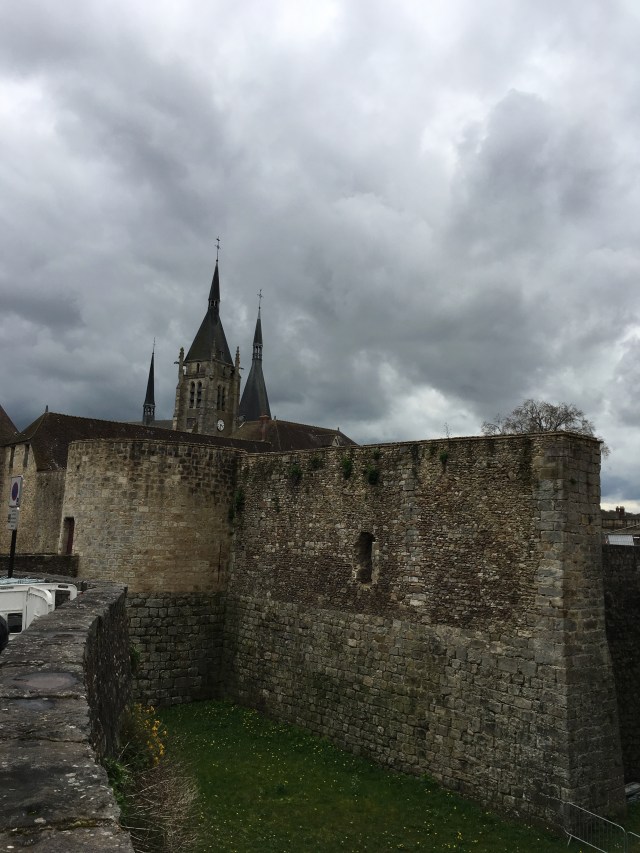
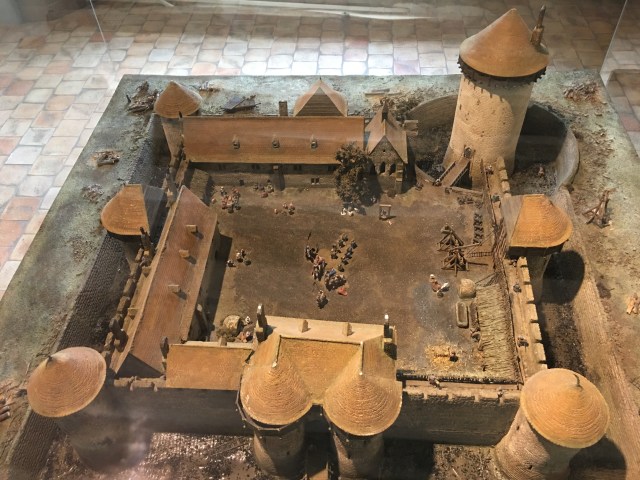
This fortress town was built 4 years starting in 1223. The plan is below. the towers were high but during the Religious Wars and the 100 Years War, the walls and towers were reduced to 1/3 their original size, as you see above.
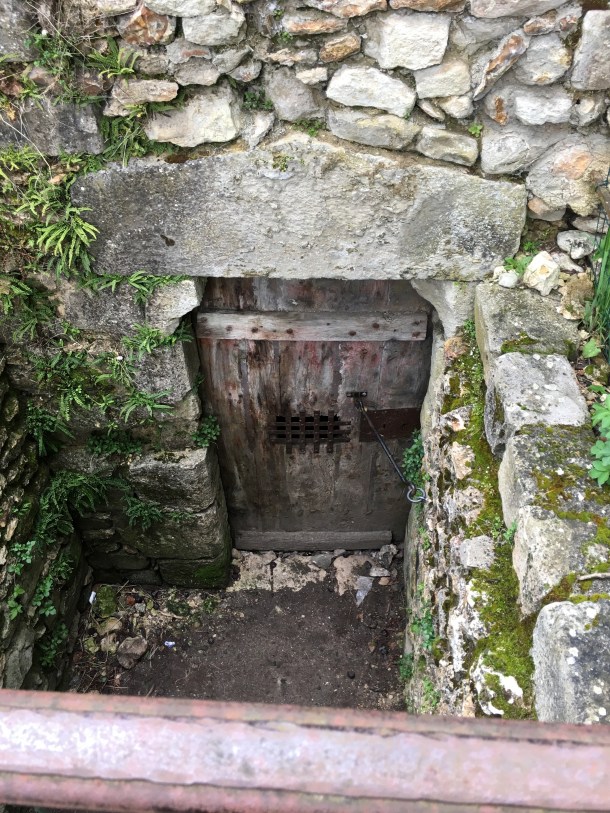
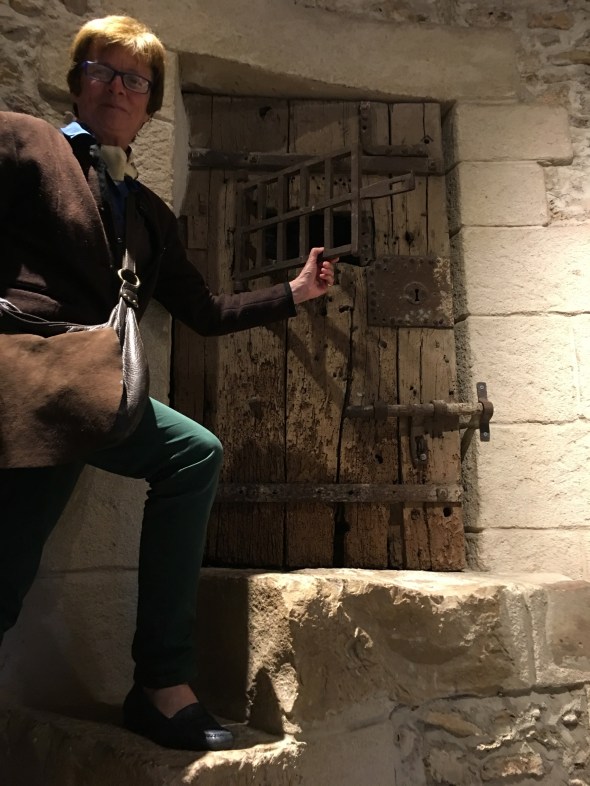
Two prisons remained — one in the outside wall and one in the interior of the fortress. Our friend is trying to get us to go in, but we all decided against it.

Within the walls of the fortress was the Chateau of Phillippe Auguste. It is now a museum. I think these two men are resting — as I know George doesn’t understand a word of the video he is intently watching!
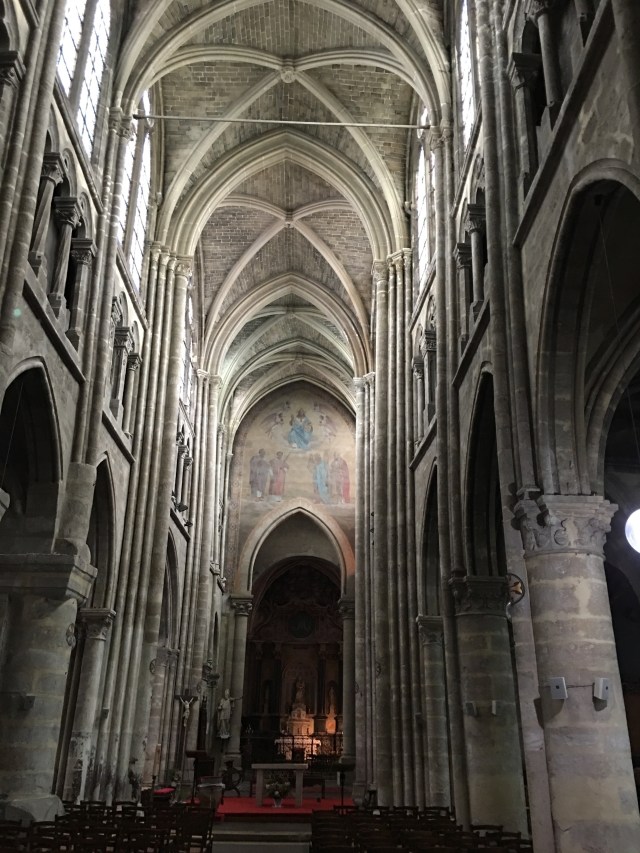
The church’s original foundation was said to have been laid by Charlemagne’s mother in the 7th century. It was closed during the French Revolution and then used as a prison. It was restored and reopened in 1869.
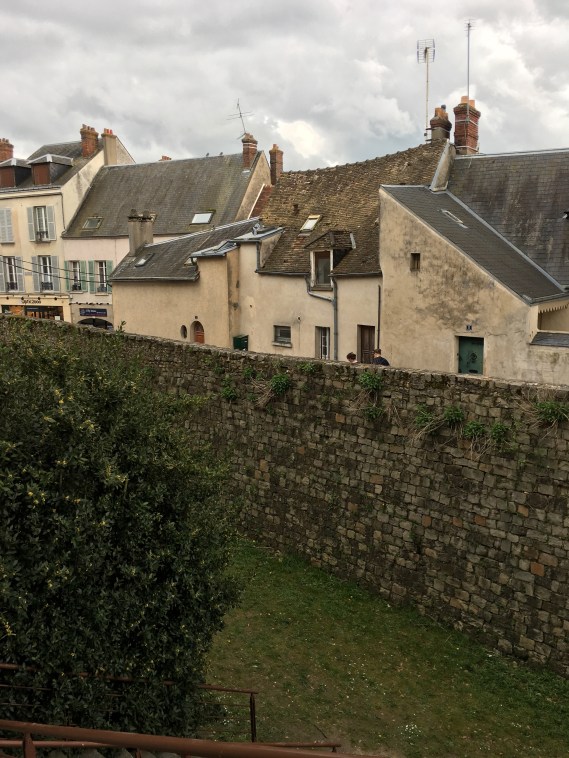
From the walls of the fortress — one sees how the town has built up outside. And people have to live and enjoy life and so there is, of course, cake to eat!! Scroll through the 3 slides…..


 pianomd
Hi Carol
I am thoroughly enjoying your commentary and your photos…thanks for sharing!
Libby
So happy that you are…. thanks for the feedback. It keeps me blogging!
love “seeing” your trip!! have fun!!!