
It’s hard to keep up with all that’s happening, though the truth is we spend a lot of time trying to recover in between our trips out and about. One thing we are very good at is taking advice on what to see, where to go, and especially where to eat. But we too have a few things to share with our French friends which are new to them that we’ve discovered. It’s very nice to have that feeling because that’s when we understand that we are no longer tourists in the place we have grown to enjoy so.
A friend suggested we go to see the Anna-Eva Bergman exhibit at the Musée d’Art Moderne. It is one of the City of Paris’ 14 municipal-owned museums and thus free to the public (though there is a charge to see the special exhibits). All of these museums are worth seeing which includes the Petit Palais and the Carnavalet in the Maris dedicated to the history of the city. The Musée d’Art Moderne was relegated to second place when a new museum of modern art was built and to which its great collections were transferred. It is the Pompidou in the Maris. The older museum is still well worth the visit. We often visit just to see the gigantic mural by Dufy called the History of Electricity, and Matisse’s preliminary studies for the work Dancers that were for the Barnes collection in Philadelphia. We didn’t get to see either of these today but headed right to the special exhibit (after paying our 15 euros each)
We understand this isn’t for everyone, but we found Bergman’s work both engaging and stunning. We had never heard of her before, and so, if our friend had not made the recommendation we probably wouldn’t have gone. You can look her up for more details about her life and work if you are interested — but for now I’ll simply say she started out in Norway, ended up in Germany (as she married a German) and moved to France during WW II. (She wrote scathing articles with illustrations against the Nazis. Not sure how she didn’t end up in prison.) As an artist she started as a realiste, but quickly moved to expressionism and then to her own style using metal leaf foils of all kinds, including gold and silver. She created a process which used Armenian bole (which is a colored clay preparation) in the first steps of working with the foil leaves. The These works are dramatic in person — you’ll have to use your imagination in order to see what we saw. (the first three photos are not the works in foil)
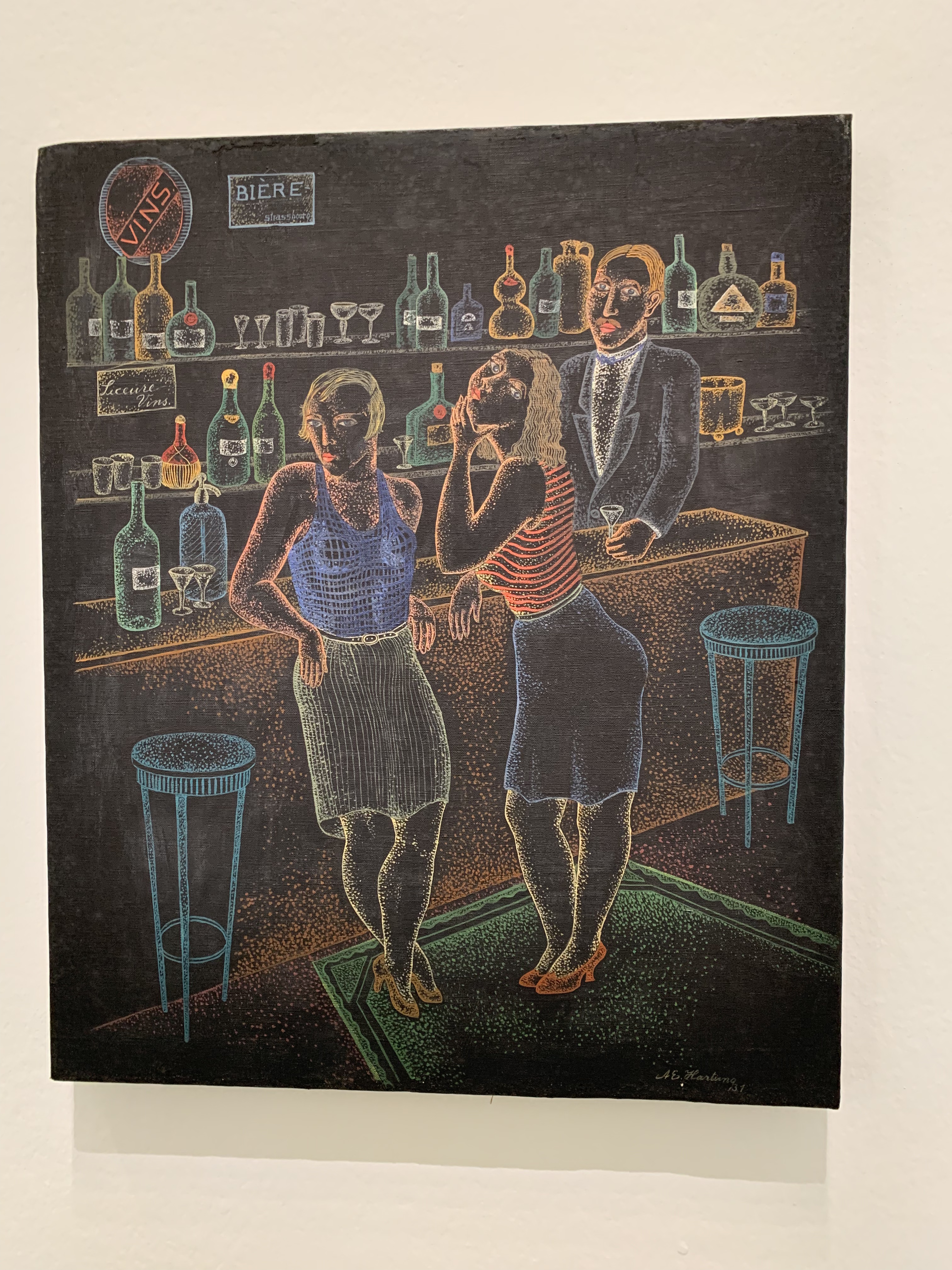
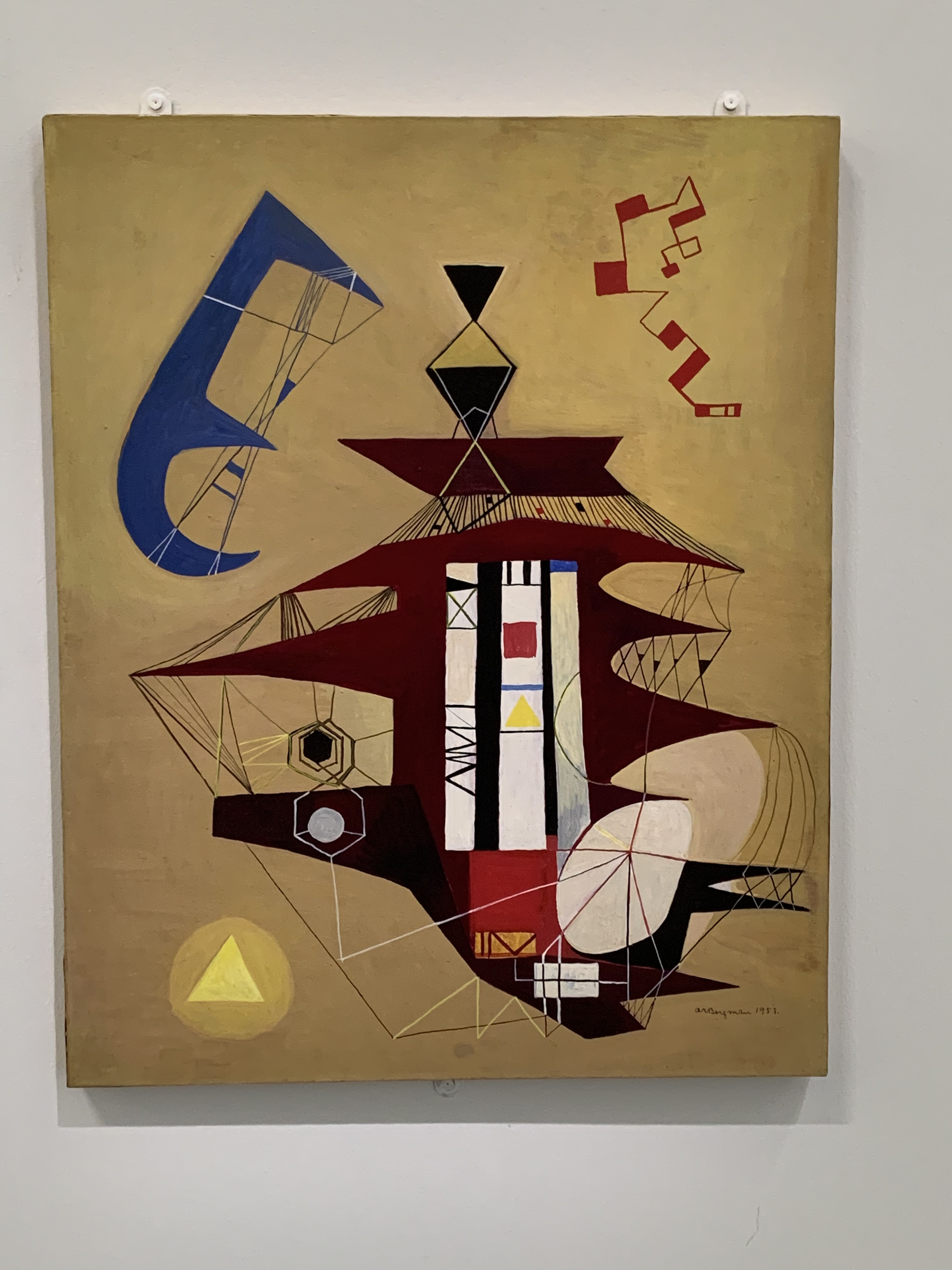

These works below are stunning. I have to admit much is lost in translation.(Sorry!) The longer you look at each the more you see. Each one is massive which adds to the effectiveness no doubt.
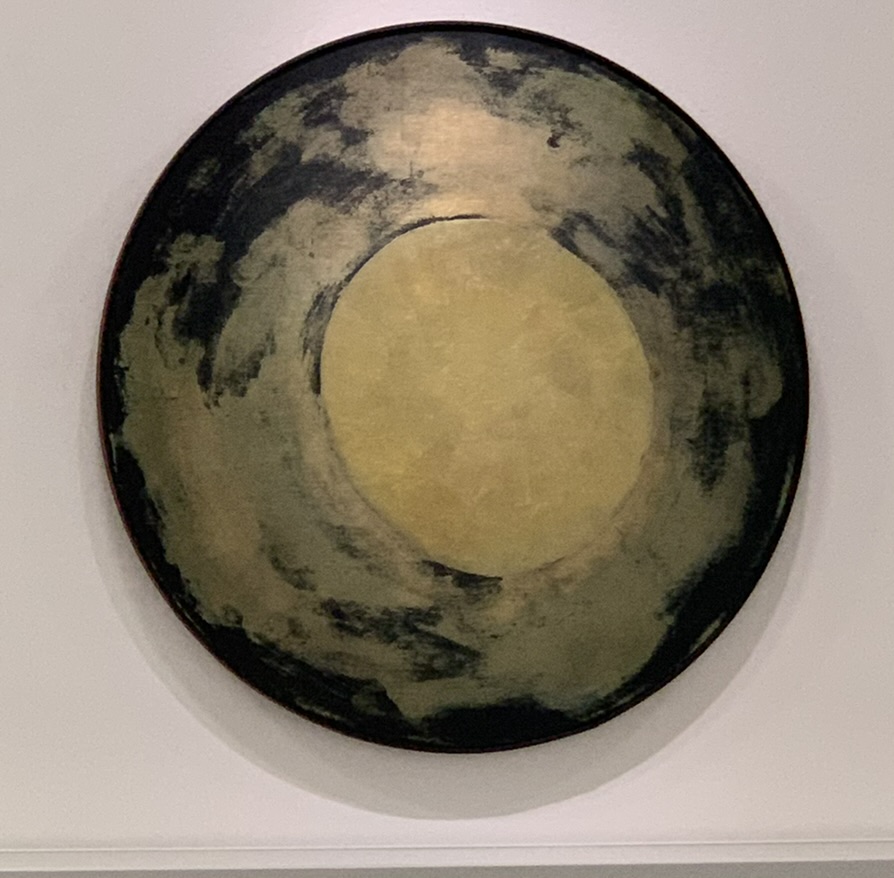
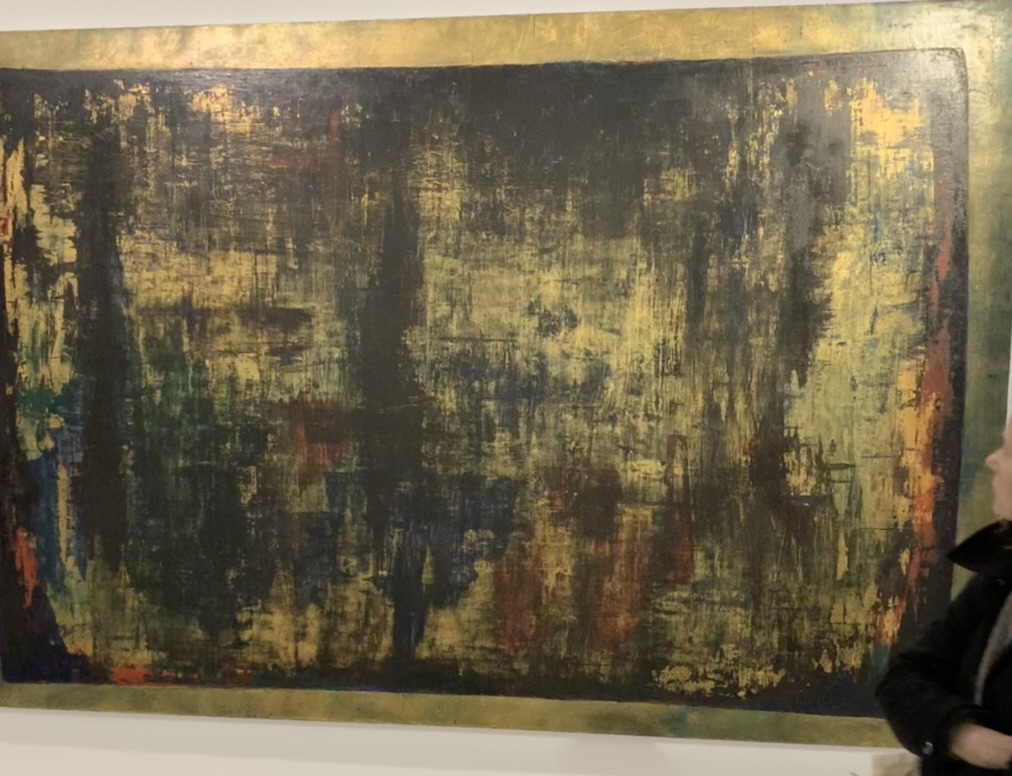
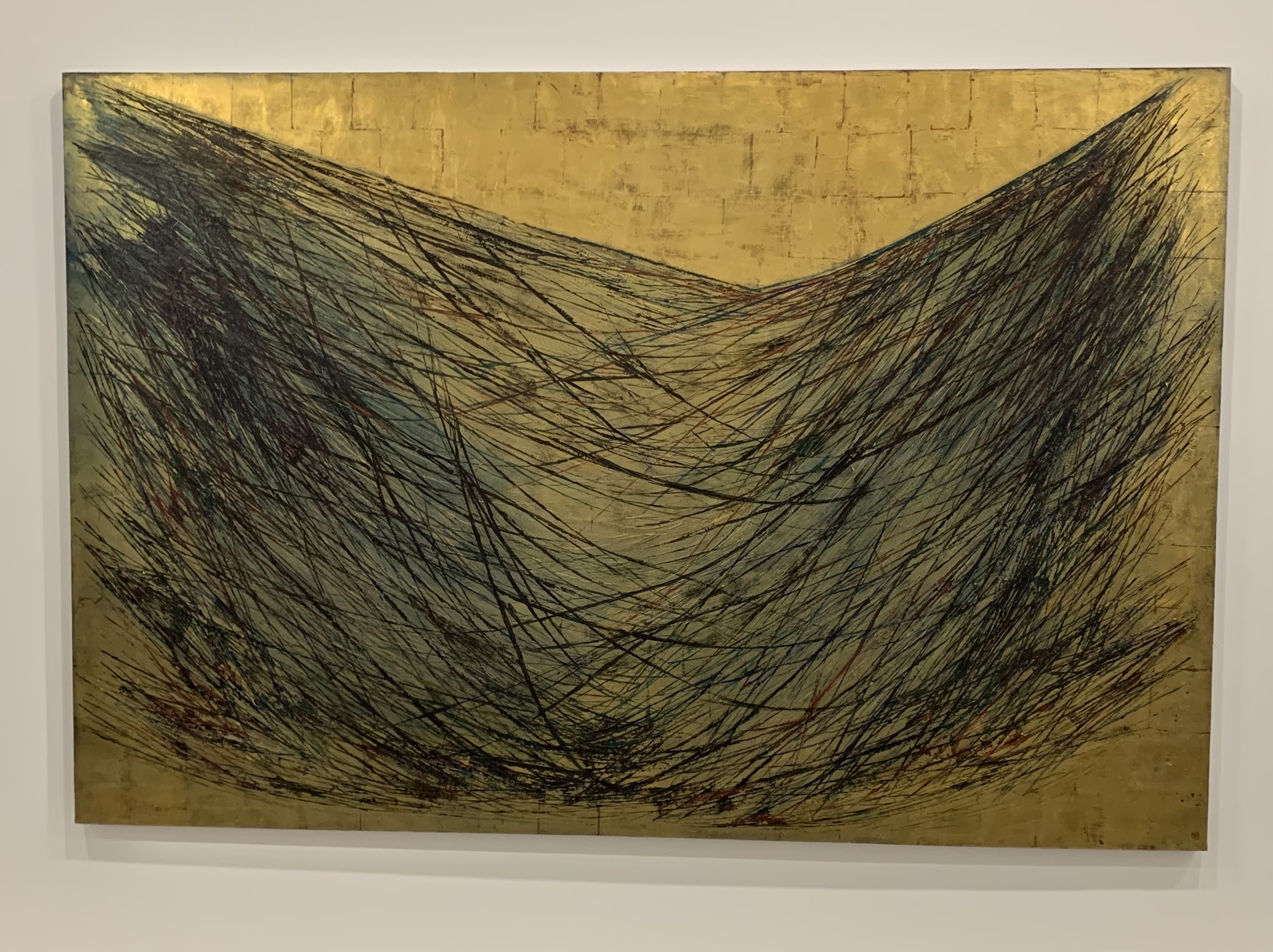
There are layers upon layers of colored foils in blocks and in strings. This work is called Mountains. We loved it and sat looking at it for a while (giving us a chance to rest!). What was really nice was there were not too many people at the exhibition unlike the more popular ones where you cannot get near the works of art because of the crowds.
After the exhibit we looked forward to lunch at the cafeteria-style restaurant in the museum. But, to our dismay it is now a fancy restaurant with service inside and outside. We took a table outside but were not comfortable so we left. We went next door – literally – to a new place as well – called Bambini. The two restaurants are side by side. The day was hot and as peak lunch hour was approaching both restaurants started to fill up.
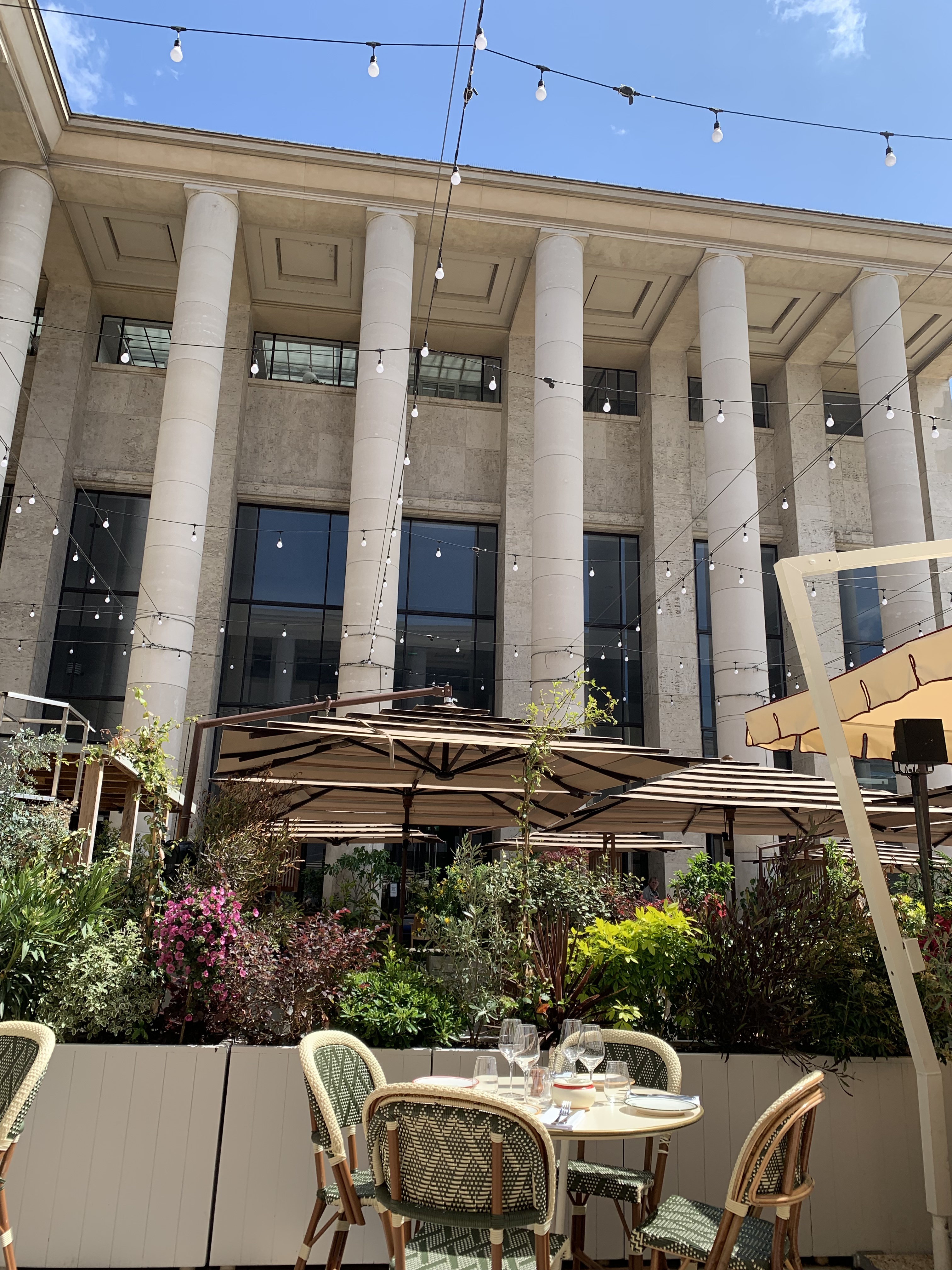
This is a view of the museum from Bambin’s — the first restaurant is on the other side of the greenery.

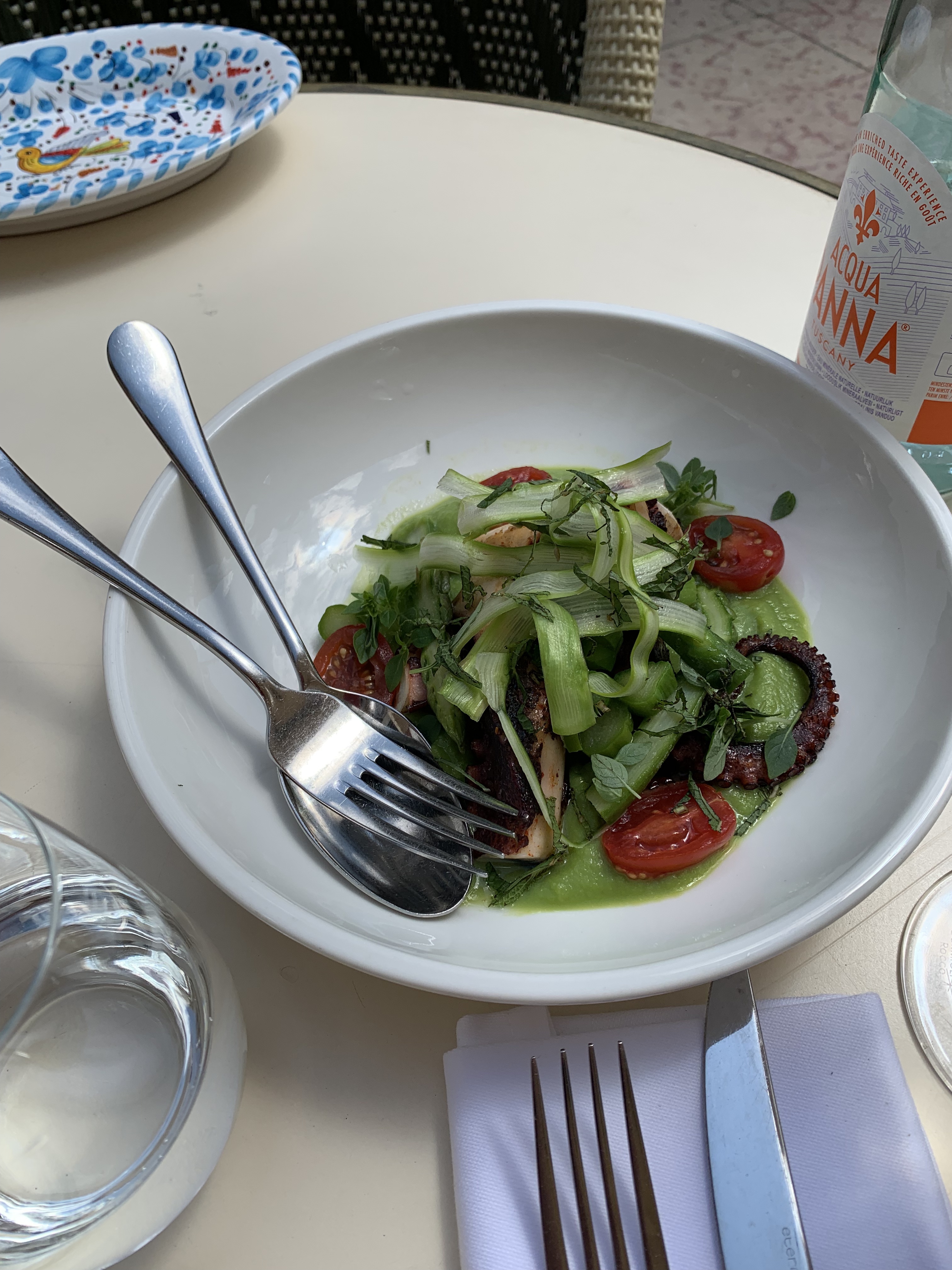
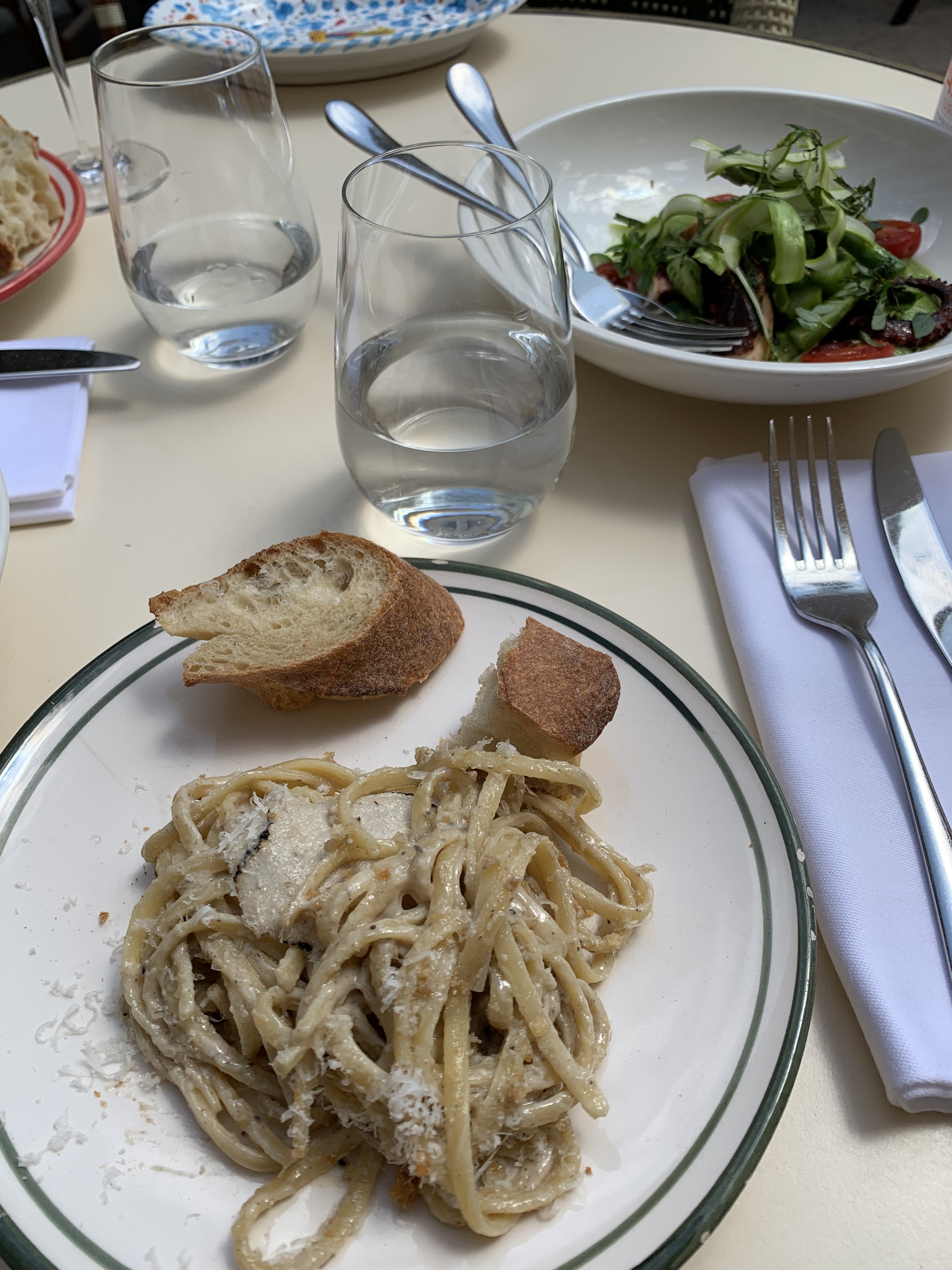
Squid salad to start followed pasta. with thinly sliced truffles. We shared both dishes. They were delicious.

When we got home this snazzy Jaquar 3.8 was parked in front of our apartment! See you in a few days — we are going for a ride — (Just kidding!)


 pianomd
Sounds like a fun time! Love Paris🥰