
Some months ago we made plans for this Saturday to visit friends of friends who are now also our friends, who live about an hour to the south of Paris. It was hard to come up with a date because this week is school vacation week and so many people (including our friends) are off and will be going away. The plan, which worked perfectly, was to visit the town of Dourdan which is close by to our friend’s home, to see the sites there and visit the grave of Roustum Raza, the Armenian mamluk — bodyguard, servant, confident — of Napoleon I, who is buried there. Raza was born in Tiflis, George to Armenian parents in 1783. He was kidnapped as a young boy and sold as a slave 6 times until he was “given to Napoleon by the sheikh of Cairo in 1798” (Wikipedia). He died in Dourdan in 1845. Some years ago I had come across his name and read his memoirs in French posted (public domain) online, Our friends (one of whom is also Armenian) knew of our interest and arranged the visit to his grave site. He was with Napoleon for 16 years. I just discovered that his memoir has been published in English – 2014.


This is as good as I can get these photos posted here. I’m sorry the writing is small and not readable. The stone we are standing next to, is an Armenian khatchkar, which is not a tomp stone, but a commemoration stone and can be found all over Armenia. (An 11th century khatchkar was gifted to the U.N. by Armenia when it began independent and was admitted to the U.N. It is stunning in its beauty). This was is in memory of Roustam and also of the Armenian men who fought and died in the French Foreign Legion after WWI against the Turks. Roustam’s tomb is to the left of his wife’s who was from Dourdan and the reason he lived here after leaving Napoleon’s service. This was the first time we were in a French cemetery. We were told that they are all the same without any grass or trees — just paved walkways with slabs marking burial places.
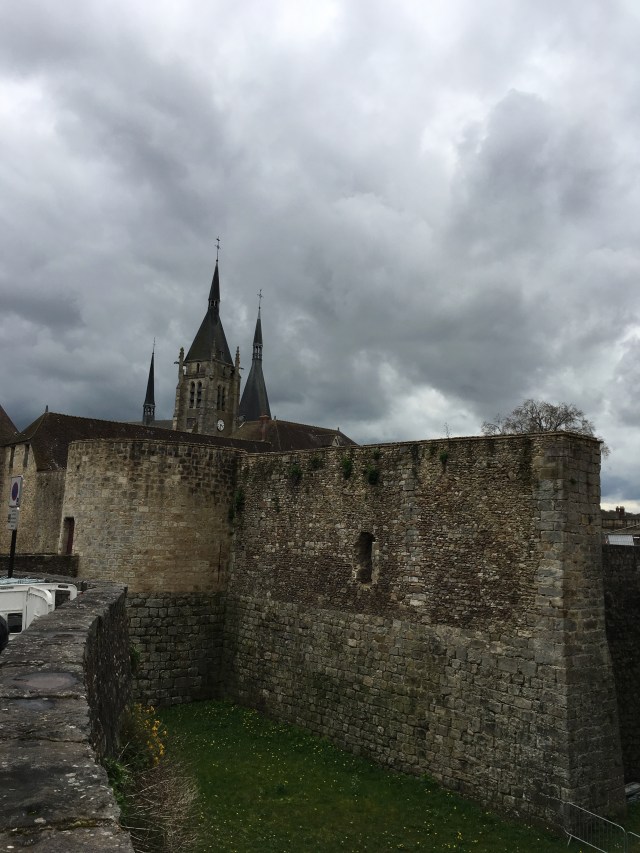
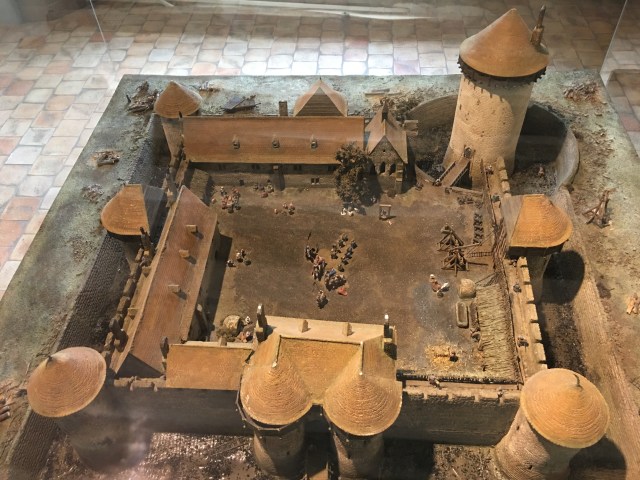
This fortress town was built 4 years starting in 1223. The plan is below. the towers were high but during the Religious Wars and the 100 Years War, the walls and towers were reduced to 1/3 their original size, as you see above.
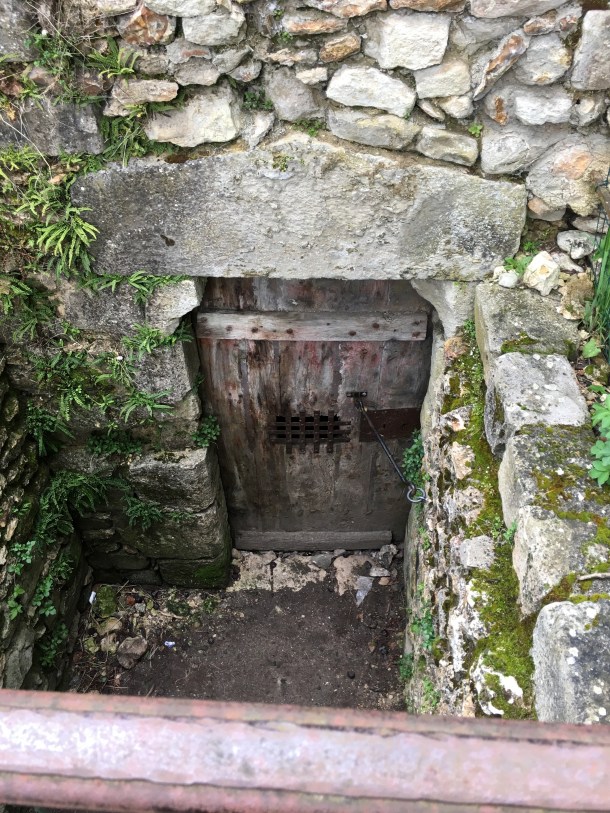
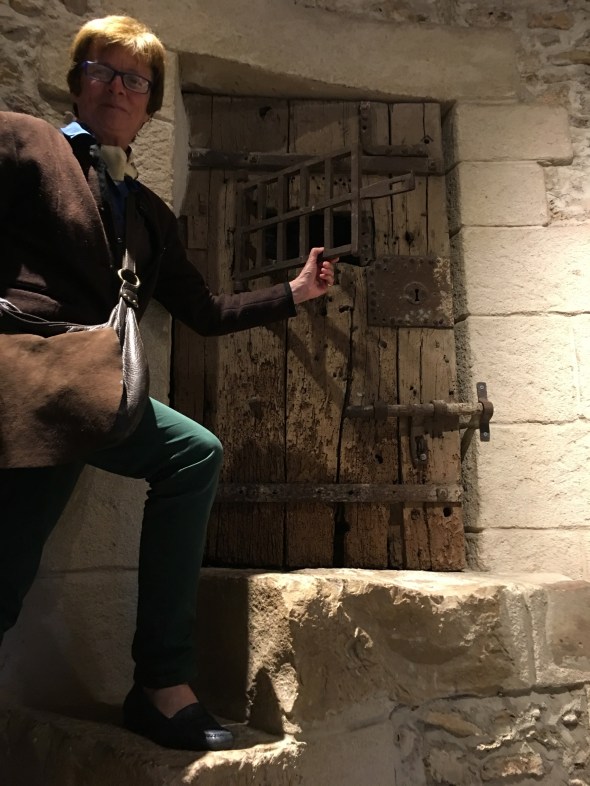
Two prisons remained — one in the outside wall and one in the interior of the fortress. Our friend is trying to get us to go in, but we all decided against it.

Within the walls of the fortress was the Chateau of Phillippe Auguste. It is now a museum. I think these two men are resting — as I know George doesn’t understand a word of the video he is intently watching!
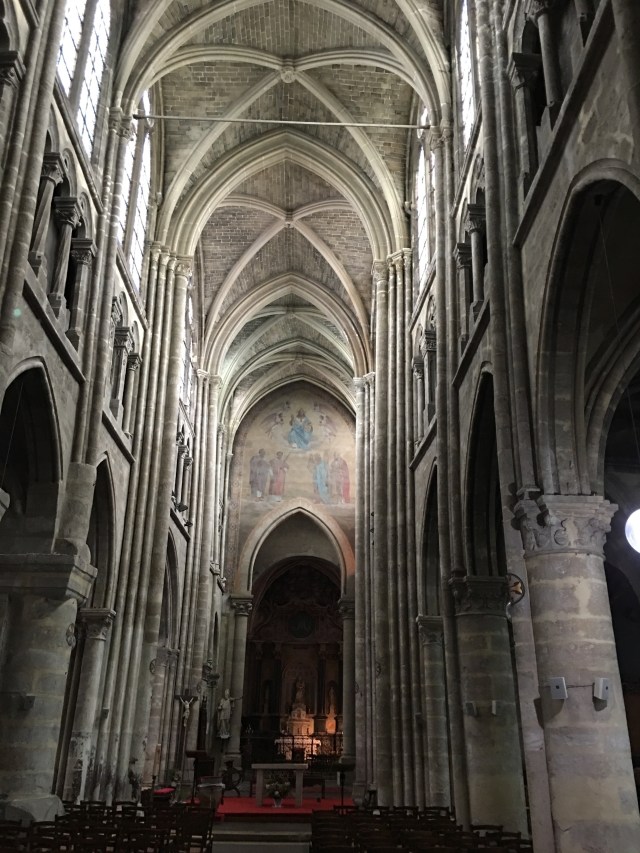
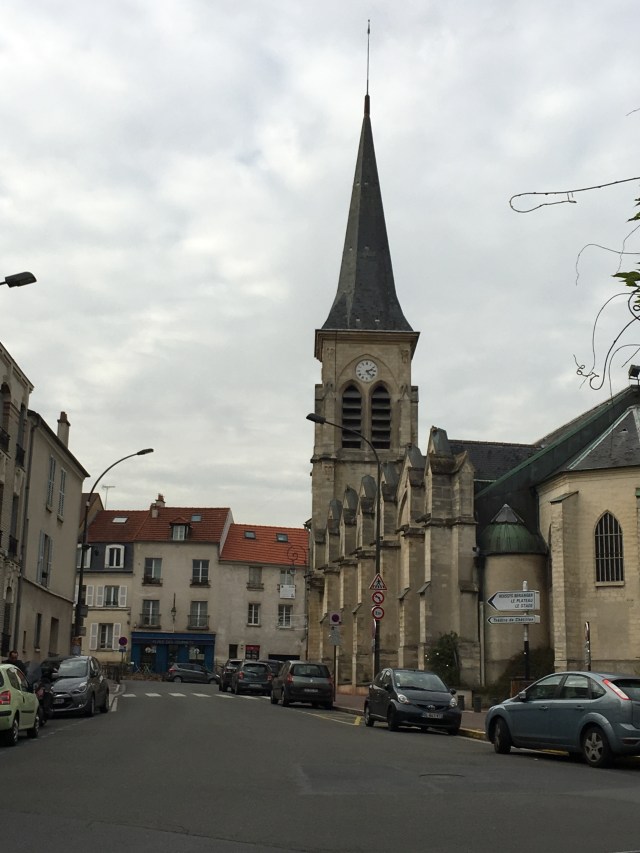
The church’s original foundation was said to have been laid by Charlemagne’s mother in the 7th century. It was closed during the French Revolution and then used as a prison. It was restored and reopened in 1869.
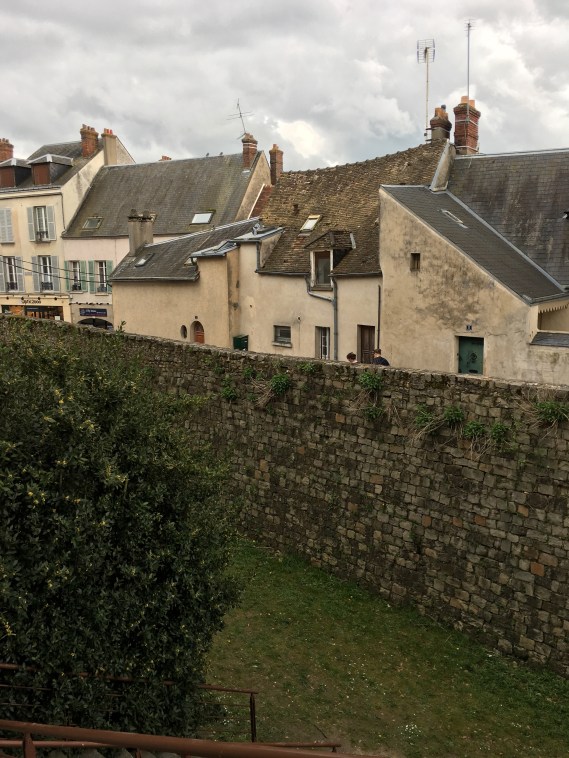
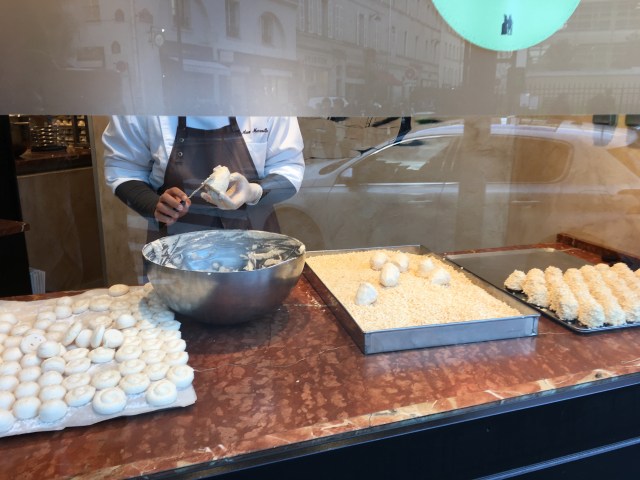
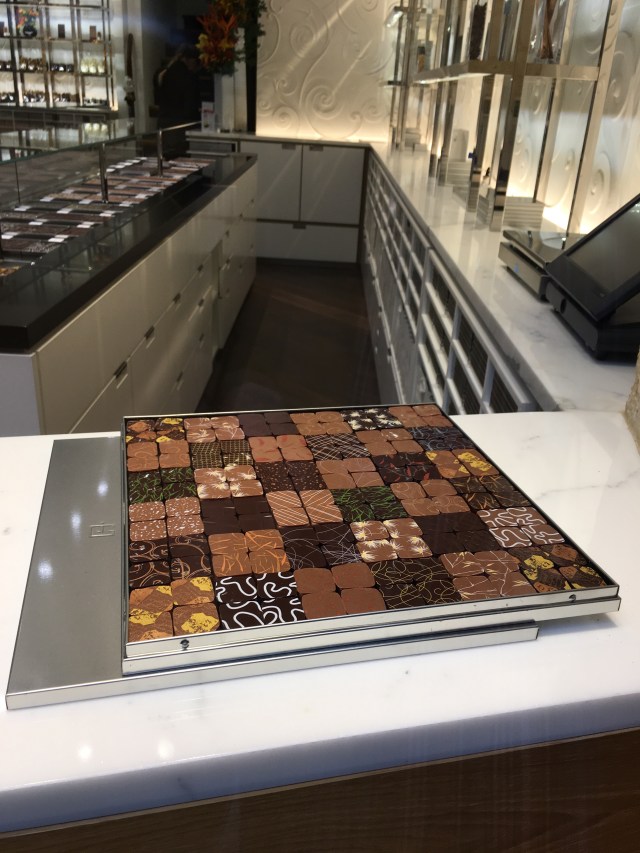
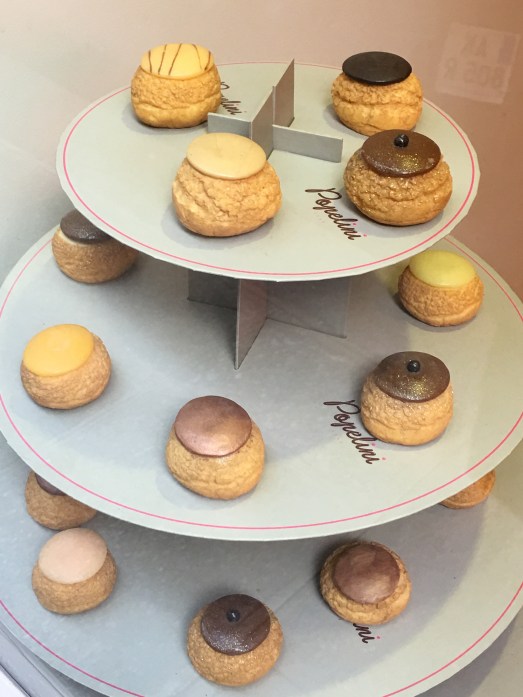
From the walls of the fortress — one sees how the town has built up outside. And people have to live and enjoy life and so there is, of course, cake to eat!! Scroll through the 3 slides…..

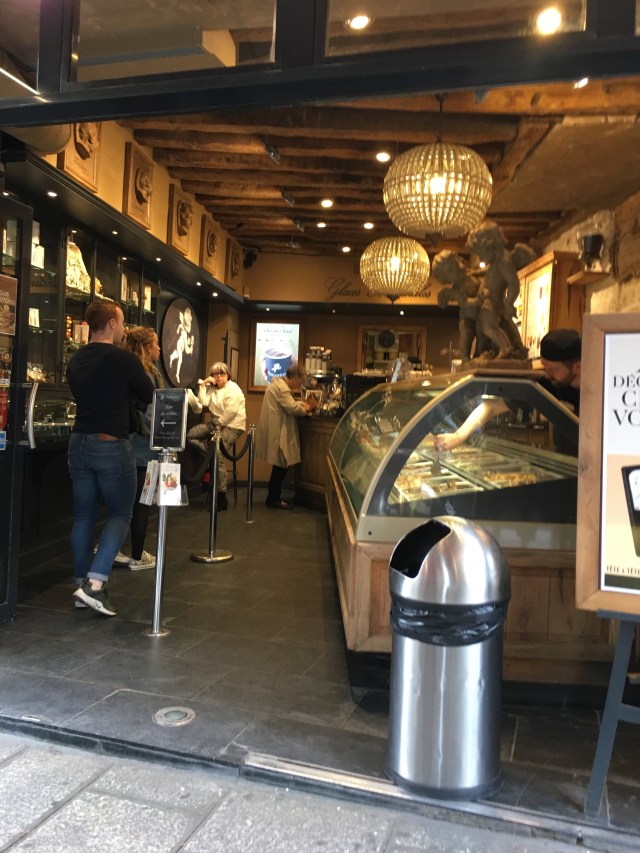




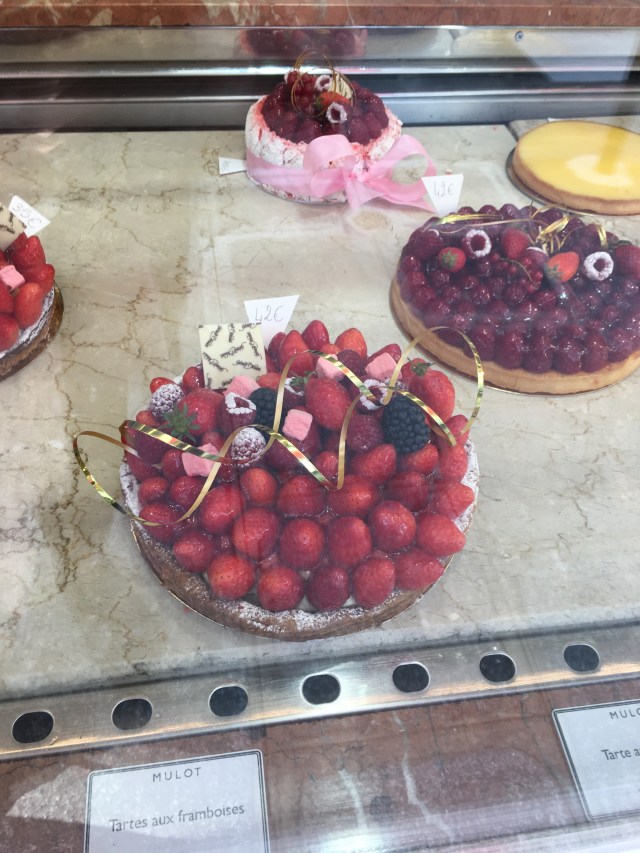
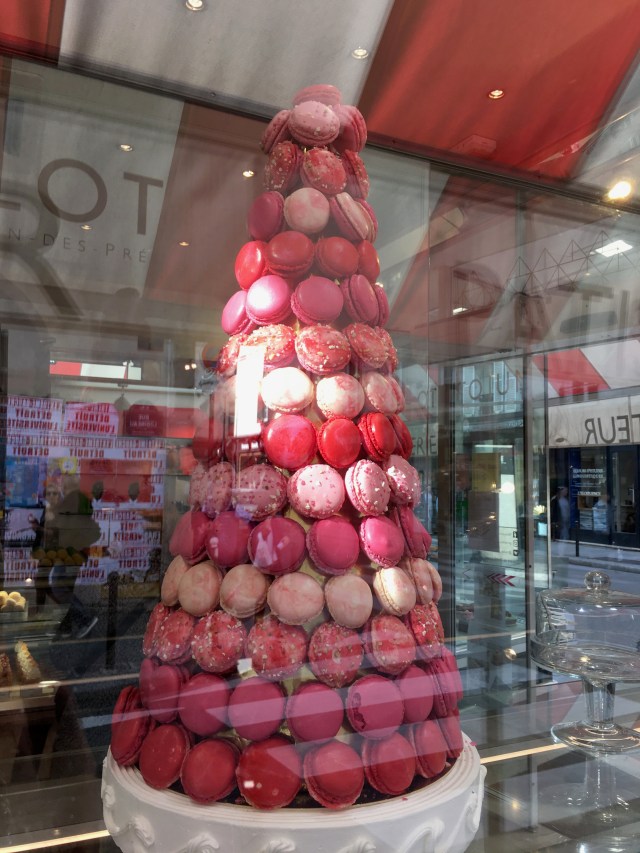
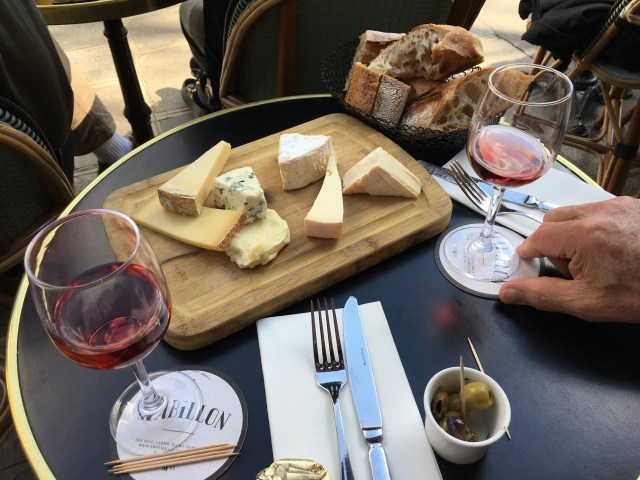
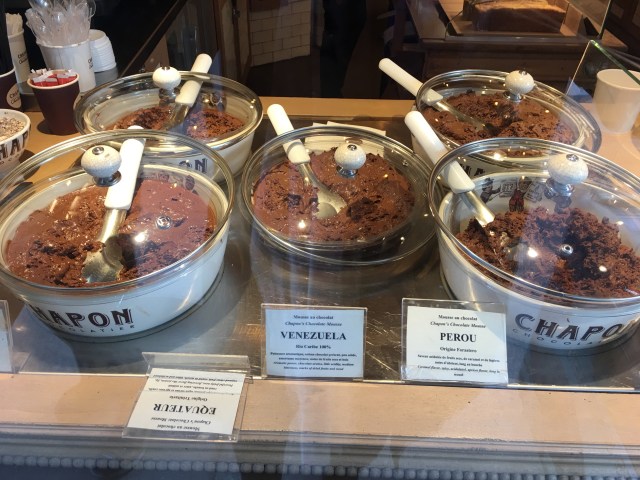
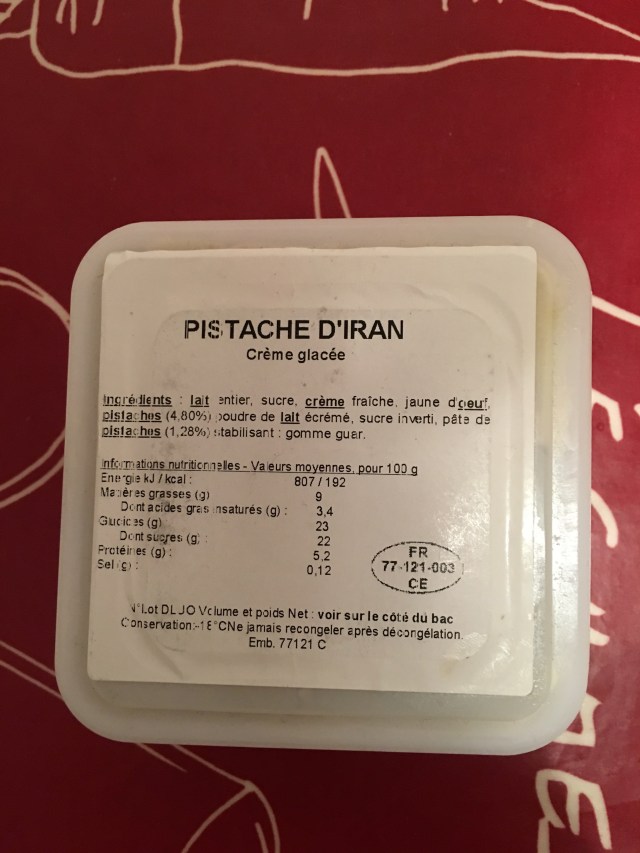



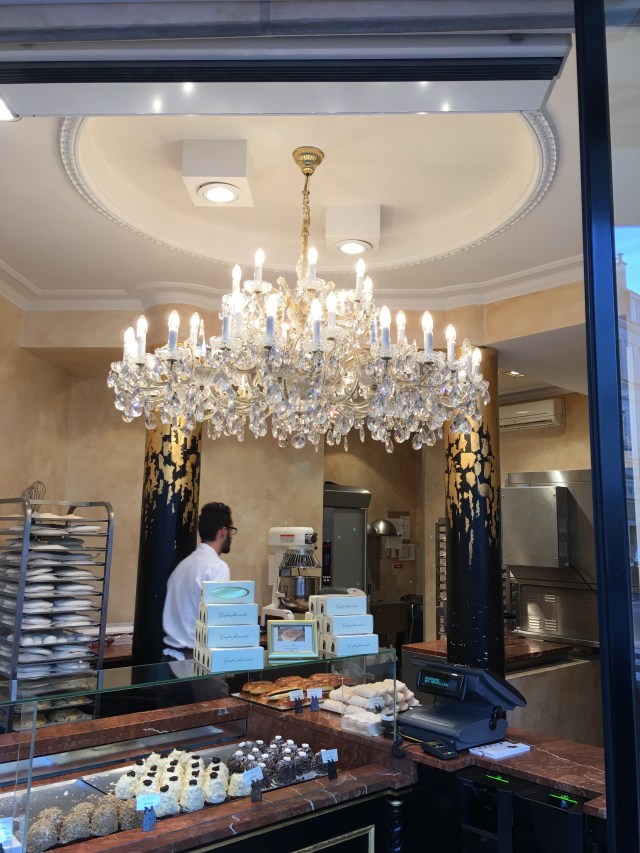 The entrance of this pastry shop has a huge magnificent chandelier. It gives quite an elegant feel to the work of baking.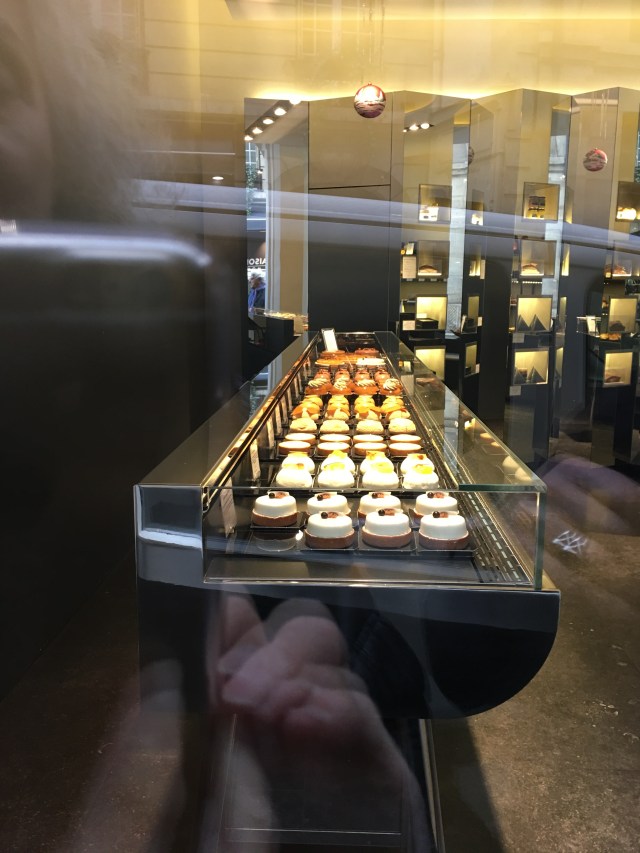



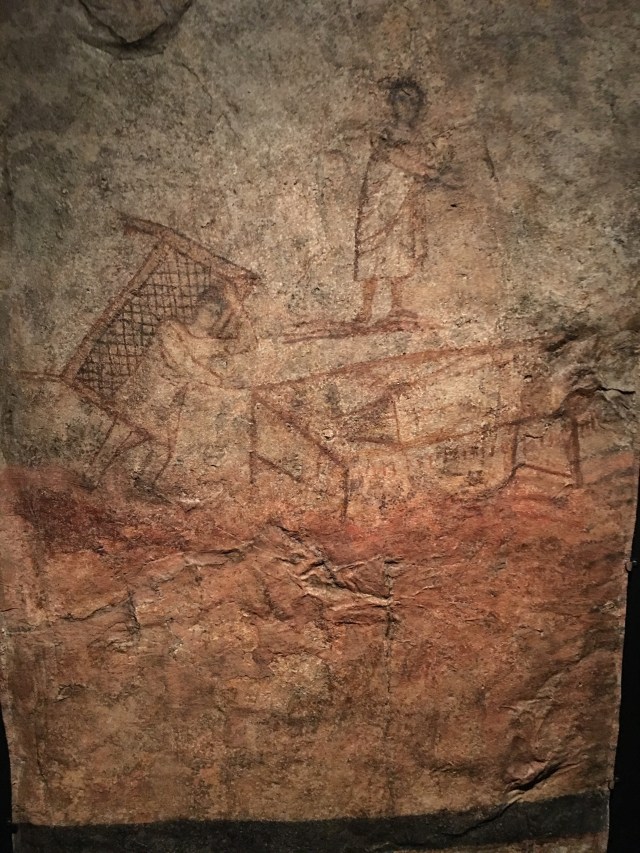


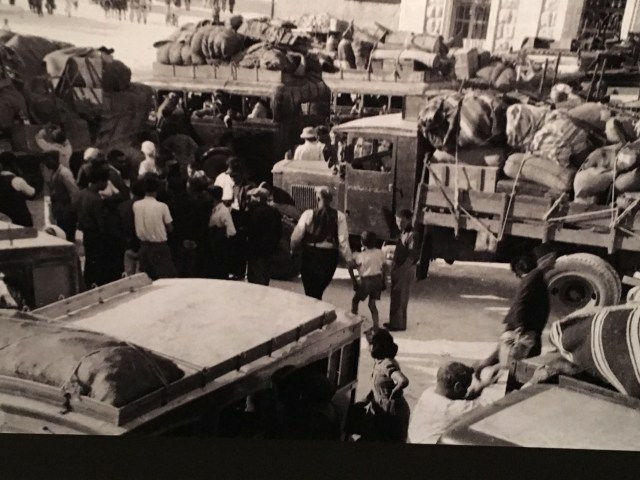
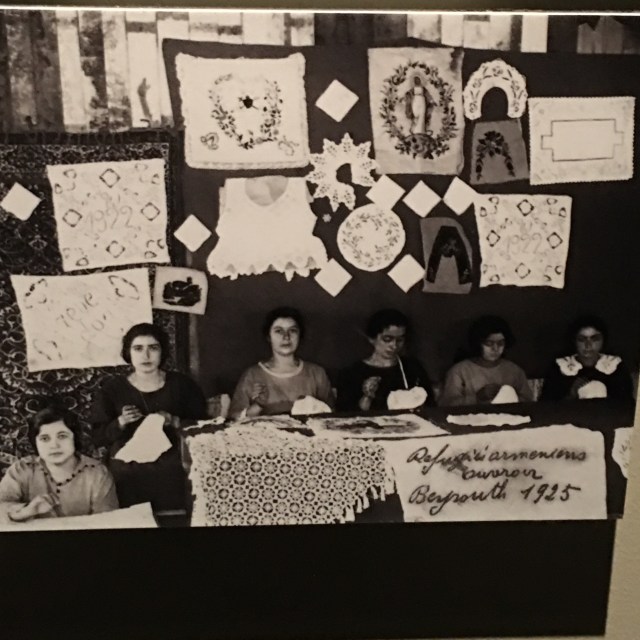 Above, a fascinating photo of Armenian refugee women in Beirut 1925, selling their laces. And, below, a photo of Armenian refugees arriving in Aleppo in 1920 (below).
 Fortunately the weather improved a bit and we decided to walk along the Seine until we found a bus stop. As it turned out, we didn’t find a bus stop and so just kept walking.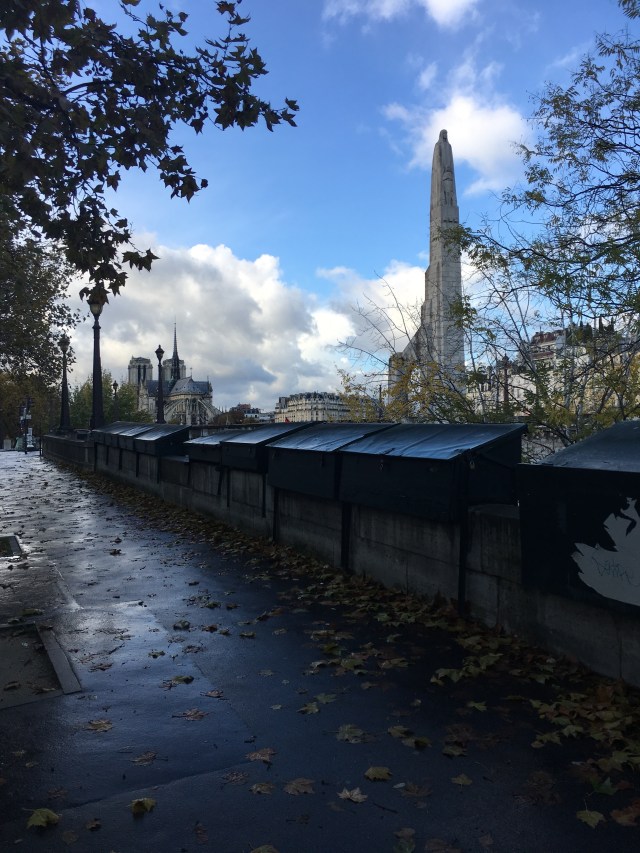
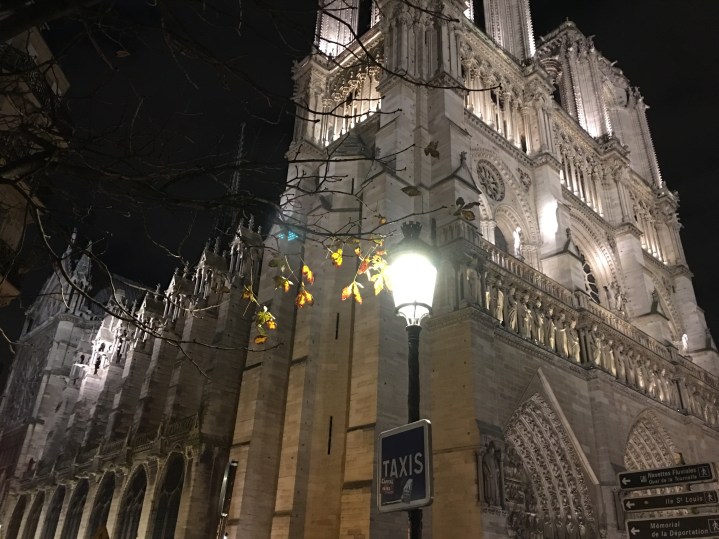
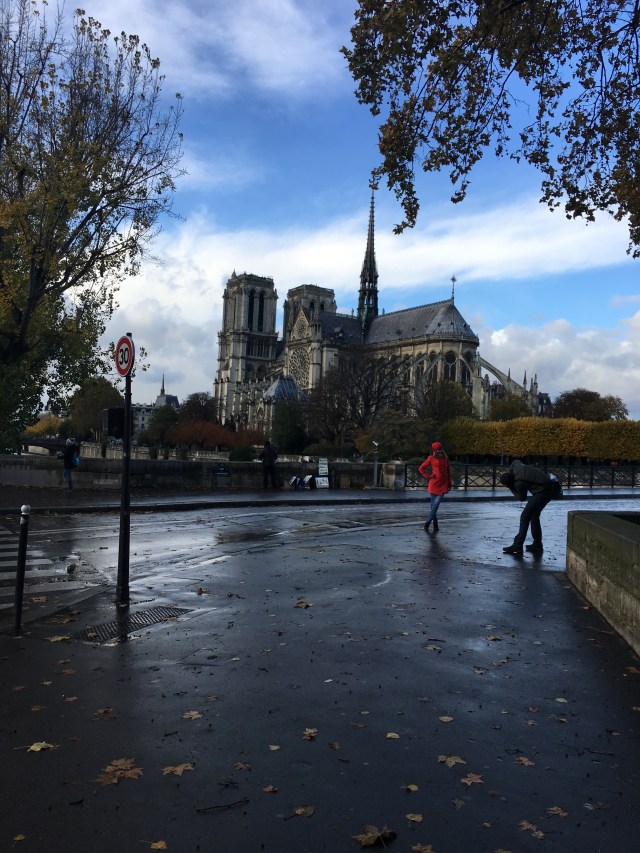 I love to take photos of the back of Notre Dame. Today I caught a model in orange being photographed with the same view.
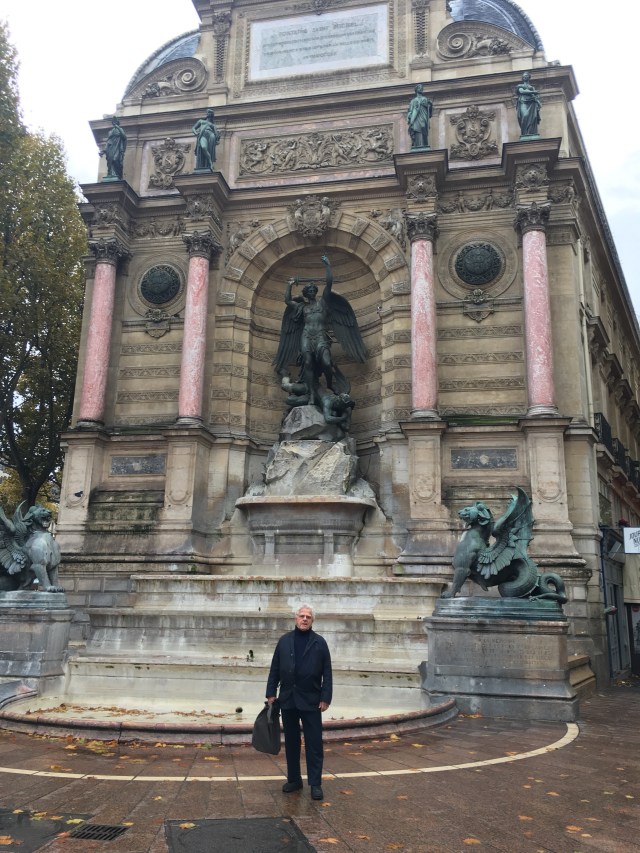 A short distance beyond and we reached the fountain of Saint- Michel. The fountains have been turned off for the winter otherwise it would have been impossible to get a photo with no strangers in it. This area is called the Latin Quarter and is usually very busy with not only tourists but students from the Sorbonne which is closeby.
 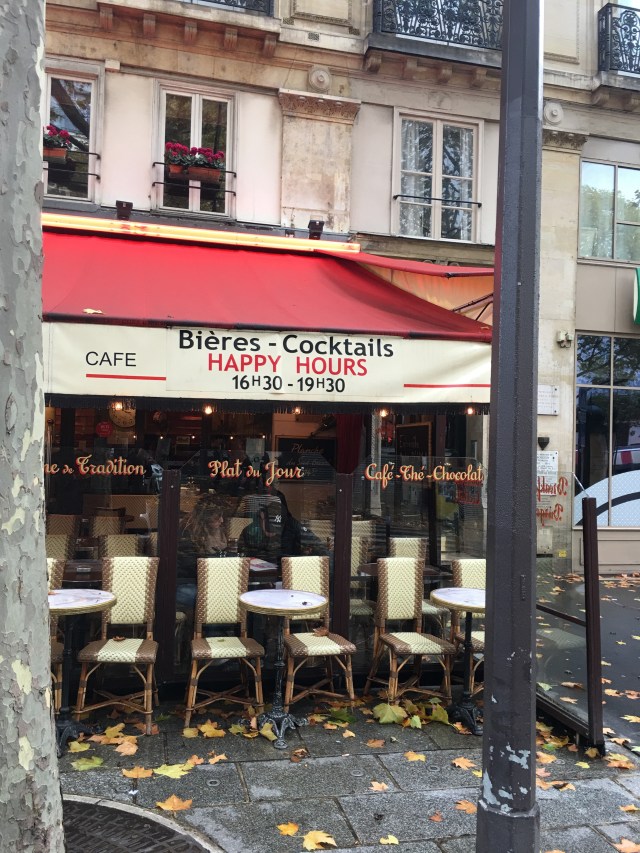 Usually packed with people, the day was too cold for even Parisians to sit outdoors. I took this though to show that places which offer cocktails usually announce it loud and clear. You’ll note that happy hour is from 4:30 to 7:30 — given in 24 hour units. I still can’t get used to the 24 hour clock, which is used for all appointments and official functions, including theater and concert times. If I think 19 hours I have no idea what it means, while 7 pm is quite clear. Now back to the narrow streets of Paris.
 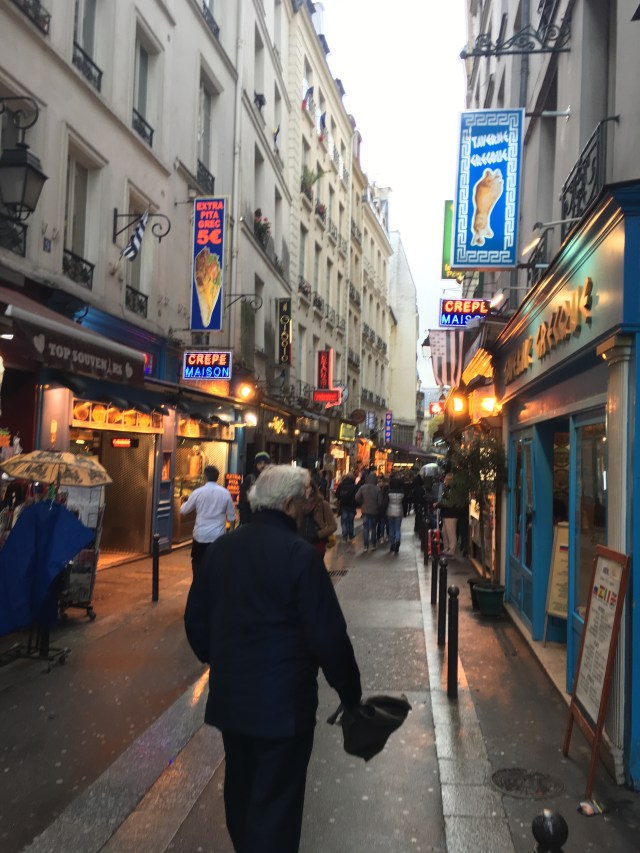 This one is a bit honky-tonk, with a lot of fast food eateries for crepes, pizza, and other ethnic foods. We were getting hungry so stopped in for a slice of pizza which wasn’t all that bad — or maybe it was that we were quite hungry. From there we continued walking until we came to the oldest street in Paris, and probably the most narrow one of all, rue Saint- Jacques.
 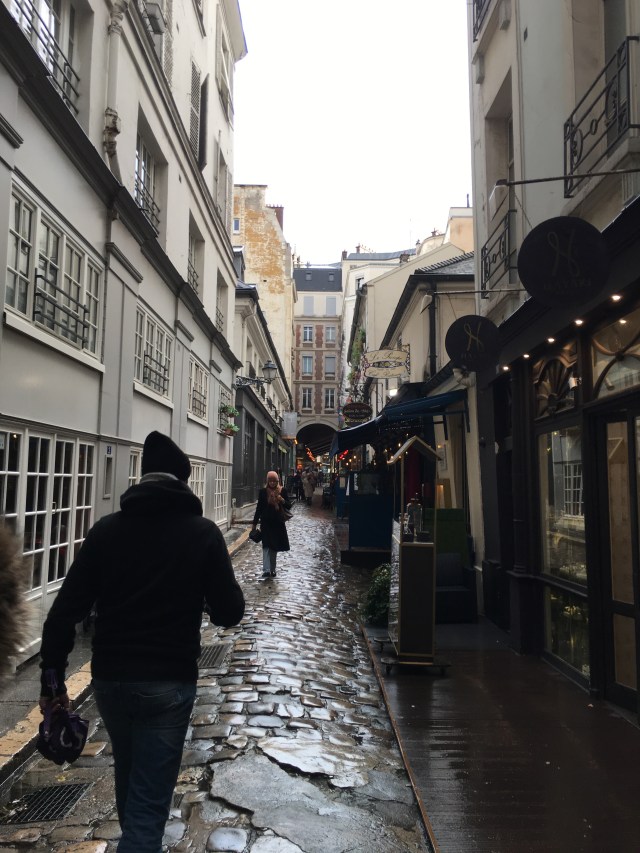 Right about now the battery on my camera gave out and we headed home.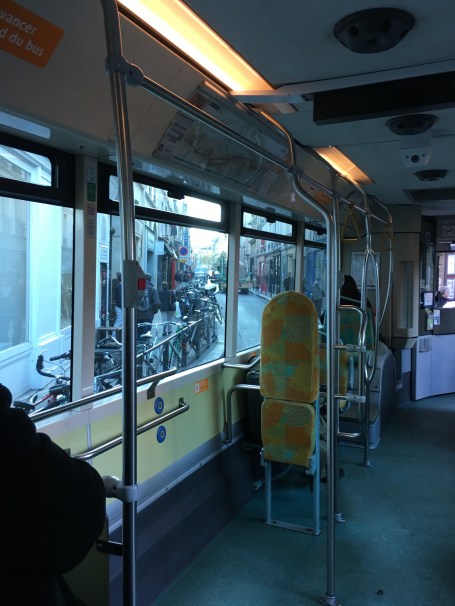
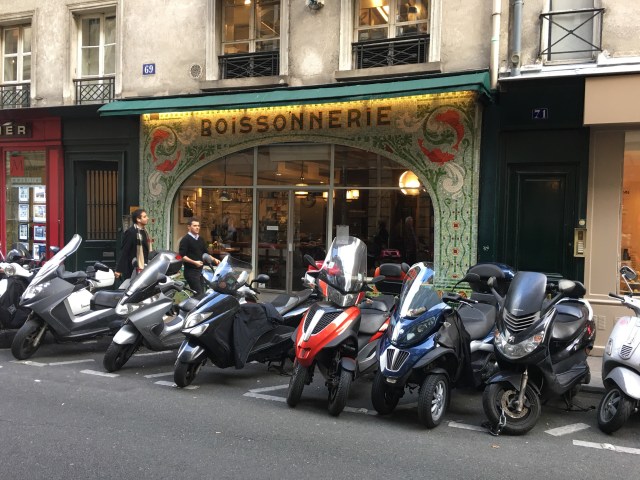
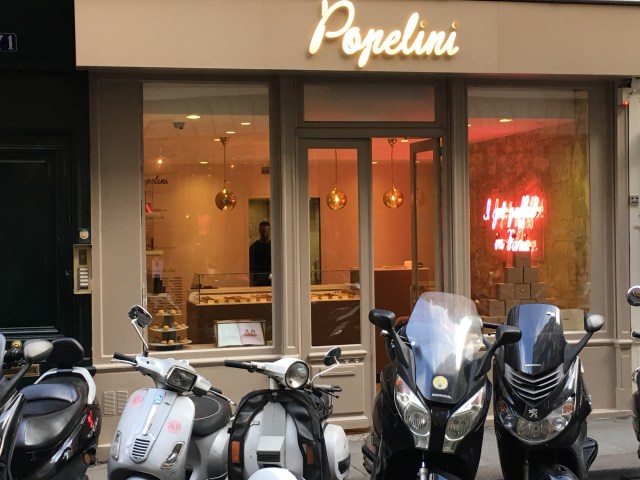
 buy a few to try.

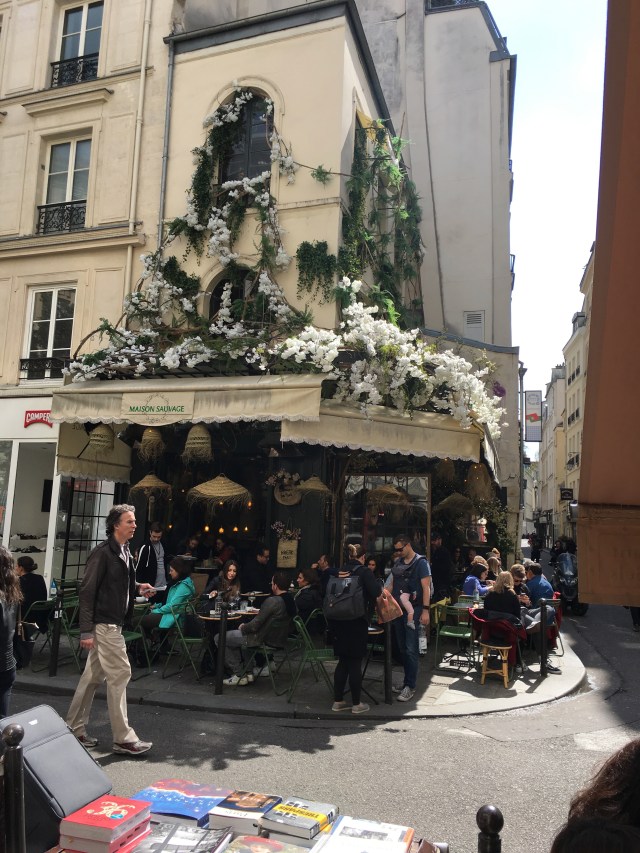
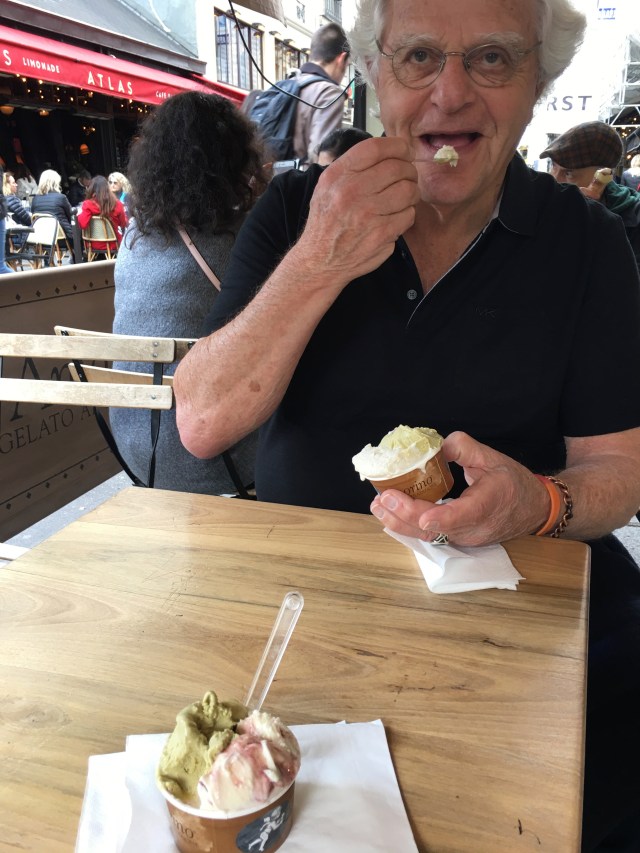
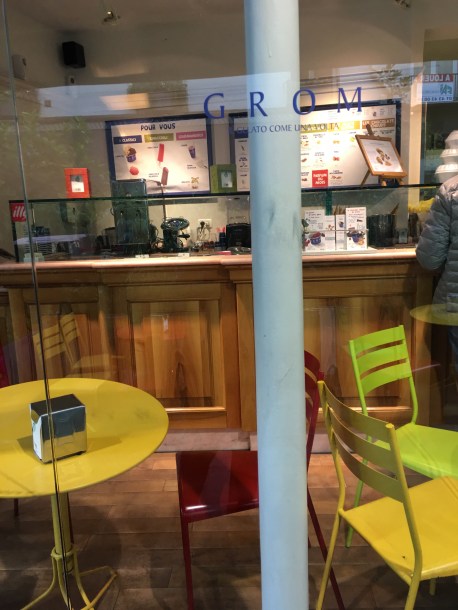 From Rue de Seine we made our way slowly home but not without first trying to buy some ice cream from Grom — what some think (and they are probably right) is the best ice cream store in Paris. It is — of course — Italian! We’ve stopped here before and recently had been reminded about it as guests brought some for dessert to our home. We thought we’d get some to take home. No way! There was a man in front of us who clearly was going to monopolize the one and only sales person’s time for the next half hour , so we left . We’ve no patience1
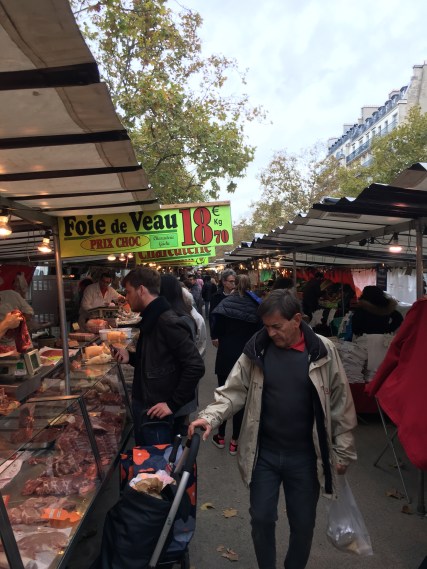
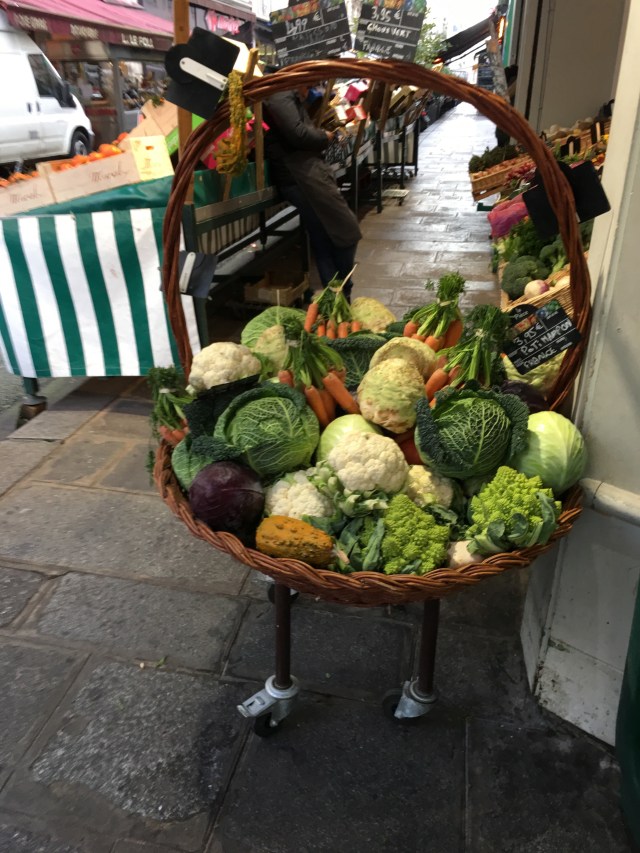 This display of vegetables on the next corner looked just like a piece of art. Had to take a photo of it.
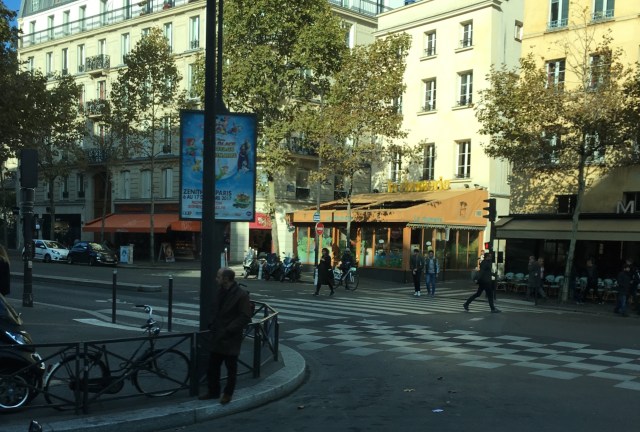 That orange building is La Rhumerie, on St. Germain Blvd. You could easily pass by it and not notice it, but it is worth noting. It is one of the most accessible and fun places to go for cocktails and light nibbles. In France, if you have a hankering for a cocktail of some sort you have to find a cocktail bar — in the upscale hotel or some place such as this one. It is fun and doesn’t break the bank. Restaurants don’t serve cocktails — except a kir or kir royale.
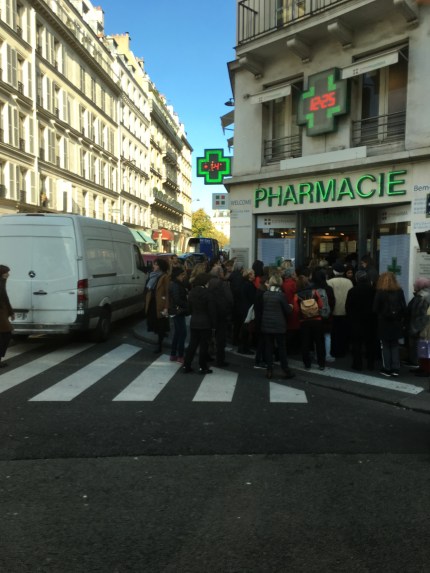 As the bus passed by I saw a crowd outside this pharmacy. i have no idea why. This was very unusual.
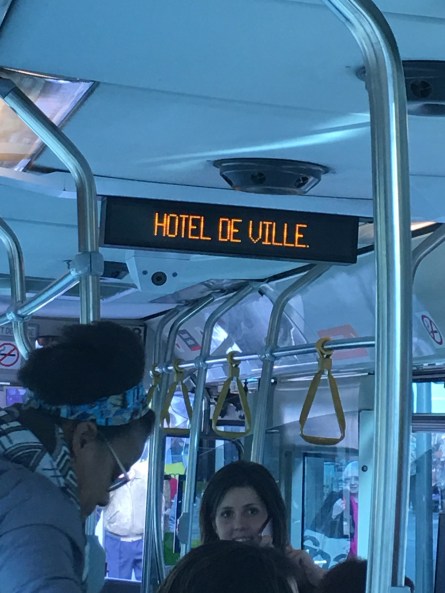
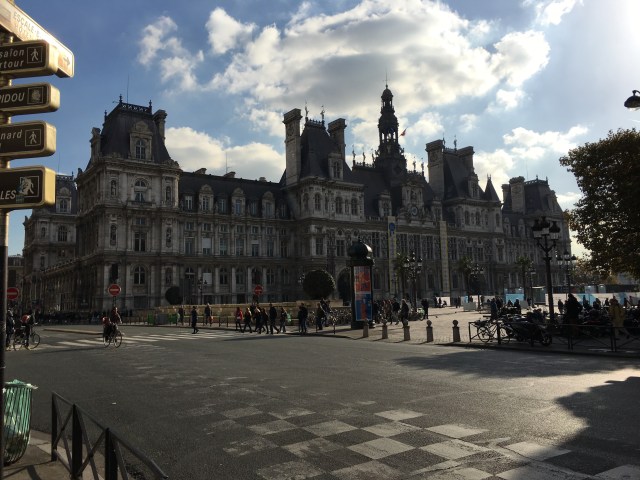 You may wonder why we’ve come here. Simple — George’s favorite department store, BMV, is just across the street and he comes here at least once every trip. Most men love this place — it has everything you could possibly want to fix, repair, build — almost anything. Not only does it have the usual stuff — but unusual stuff too. I don’t have any photos of the inside (except one) to show you, but take it from me, it is worth the trip.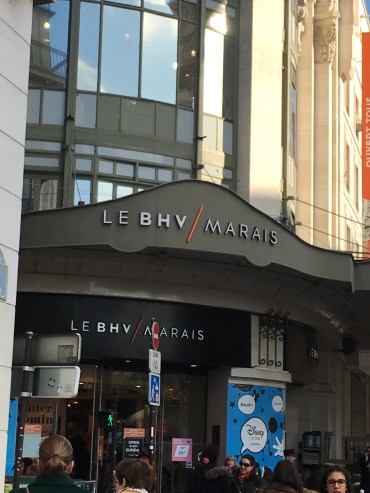
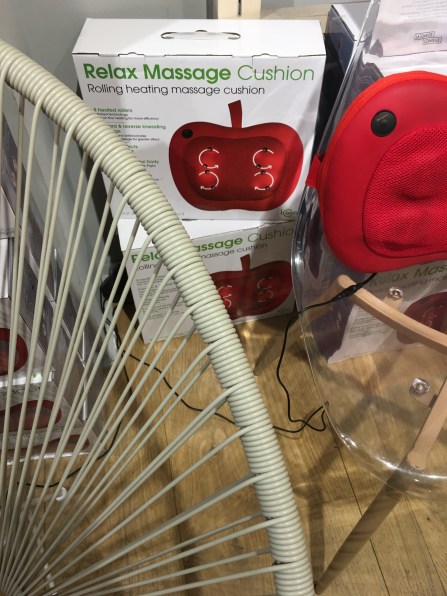
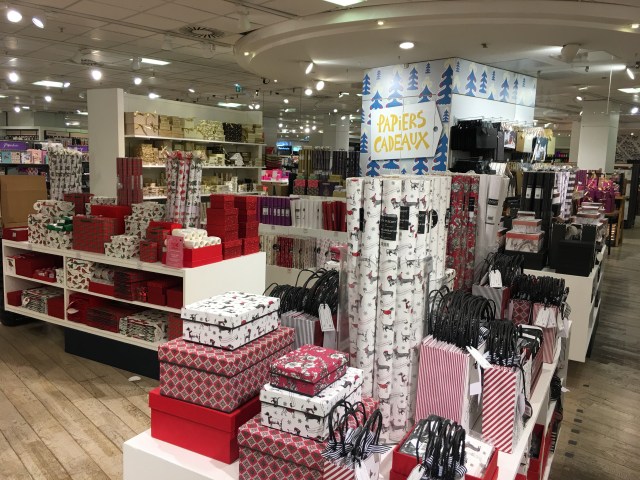 We ate lunch in the cafeteria style restaurant on the top floor and then worked our way down. Not very exciting, but this display caught my eye — Christmas has arrived. In the appliance area we stopped to look at espresso machines, specifically at the Jura display. The machines start at 550 euros and go up to over 2000 euros. We talked to the salesman at length trying to learn why this machine cost so much. Seems it is a highly computerized meticulously engineered Swiss-German appliance. George had a sample coffee and we moved on. On the way to catch the #70 we stopped into gadget shop. We both had excellent neck and back massages delivered by these funny pillows. Next — a chocolate at the Belgium chocolate shop, Jeff de Bruges…
  Now time to head home.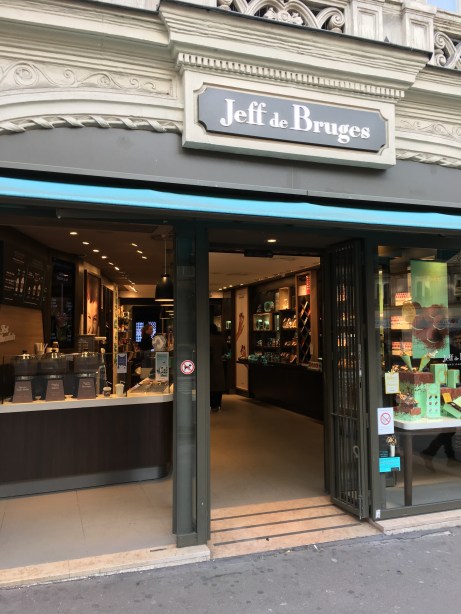
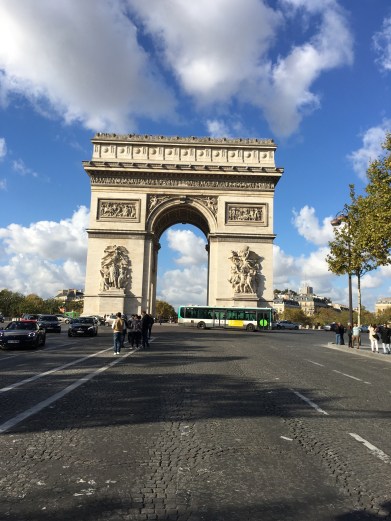


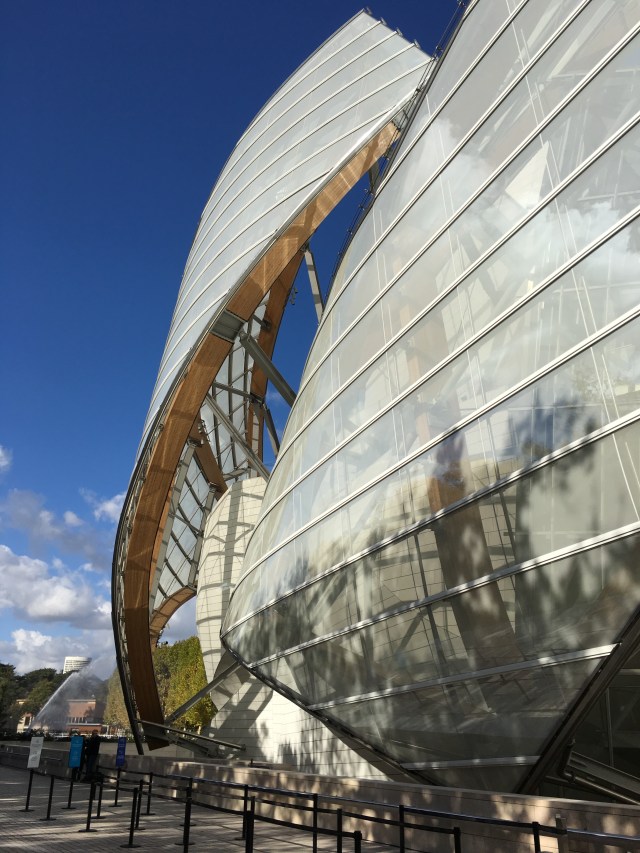 There was some wonderful art to see such as this Klimt and the Jasper Johns painting, Map.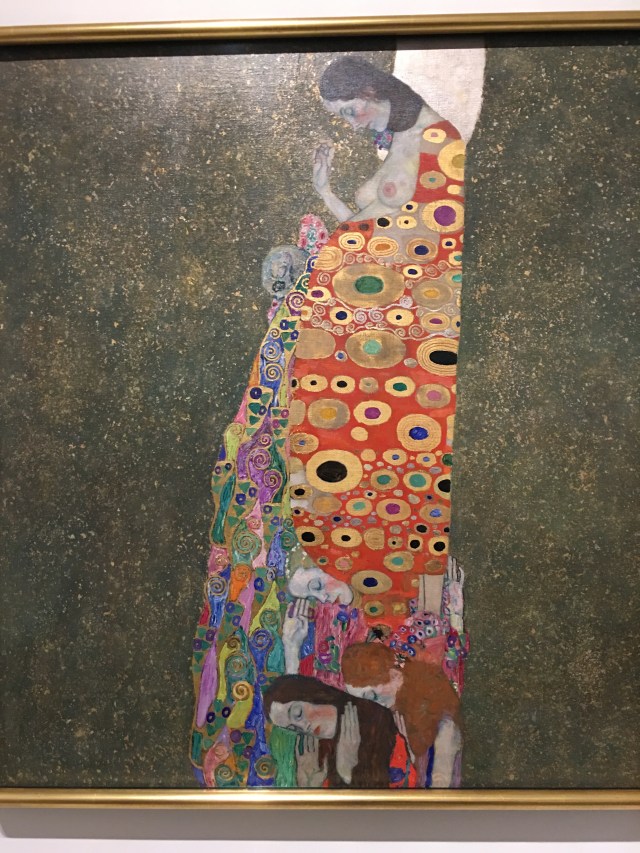
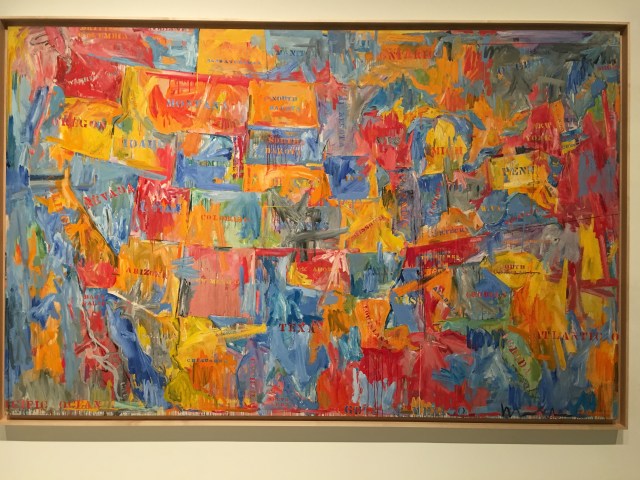
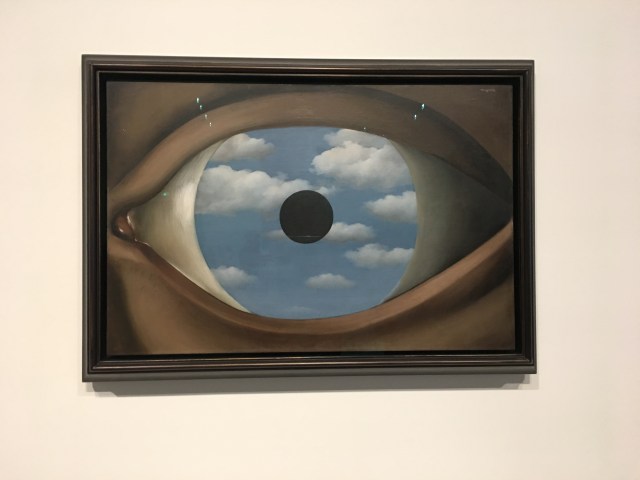 I did like this eye — without lashes — entitled The False Mirror by Magritte, a surrealist painter from Belgium. Below, George is checking out part of the the structure which is visible at various point throughout the museum.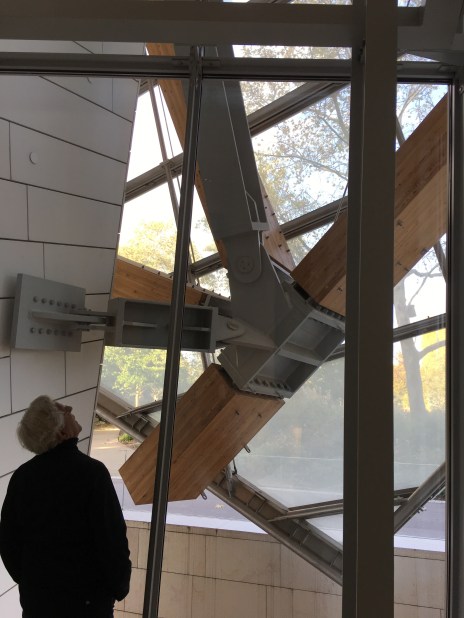
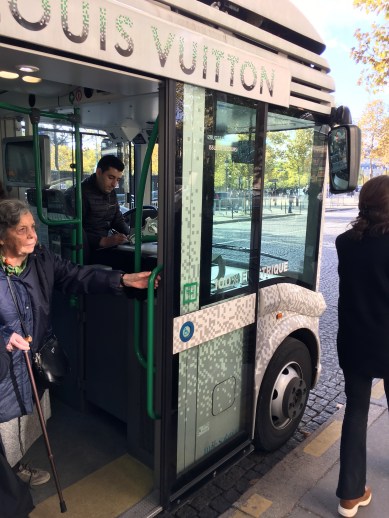 The electric shuttle bus from Le Place Charles de Gaulle to the museum. It holds only about 12 people and is so cute!


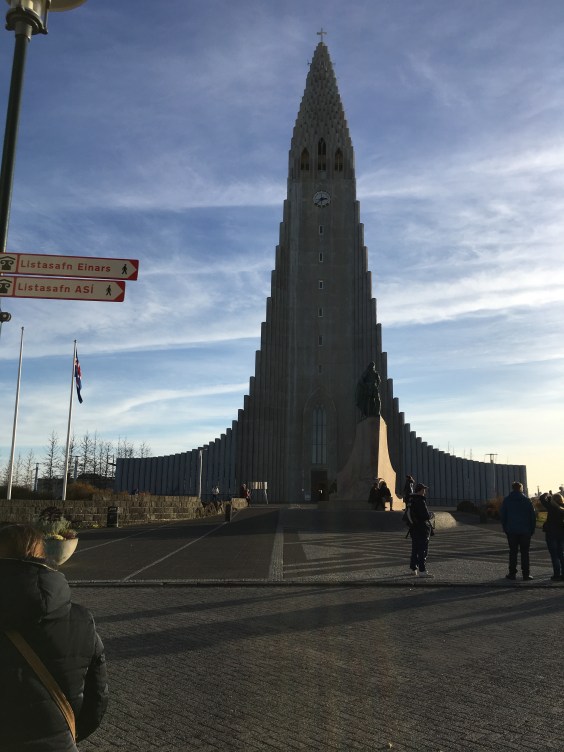
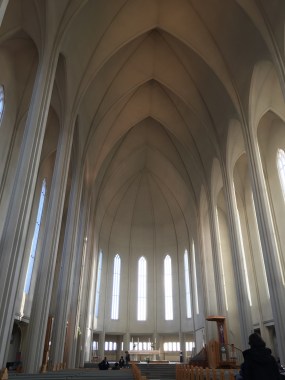 Inside the cathedral.
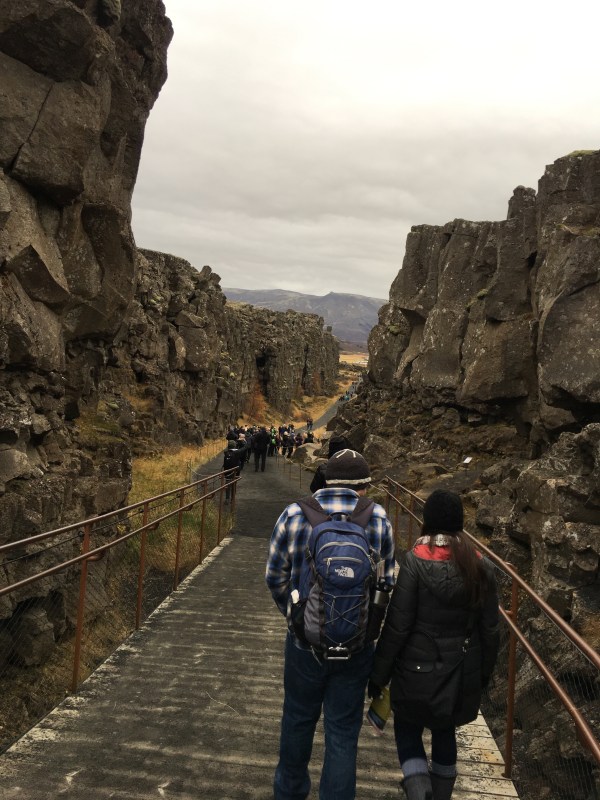
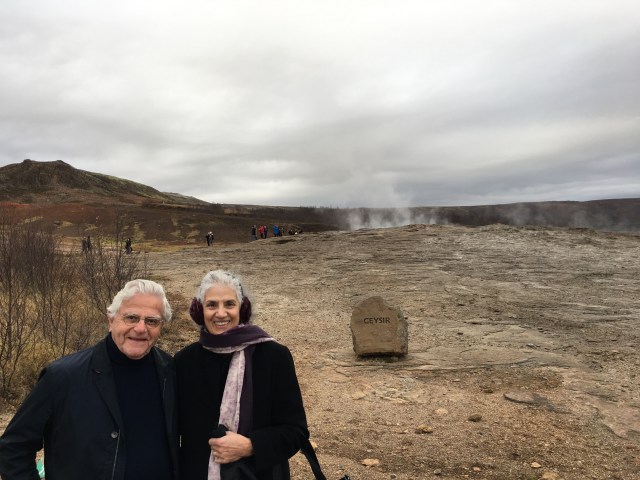 But this is us! Here at the ‘Geyzir Center’… one of two very hot spots in Iceland. There is hot water all around however, with swimming pools all over Reykjavik which are used by the locals all year round. The country is energy self-sufficient given all this hot water power that is bubbling from within this volcano-formed island.
 A geyzir up close — this was one of the big ones. Tourists are warned not to go near them or to be tempted to test the water temperature. (400 F.)


 pianomd